Your Backpack and the Overhead Bin
You’ve booked the flight, sorted the accommodation, and now comes the part that stresses out almost every traveller: figuring out what you can actually bring on board without paying extra fees at the gate. If you’re planning to travel with a backpack instead of a rolling suitcase, this guide covers everything you need to know — from carry on backpack dimensions and airline rules to what features make a travel backpack genuinely worth packing.
Yes, Backpacks Are Allowed — Here’s How It Works
Yes, absolutely — and for many travellers, a backpack is the smartest choice of hand luggage you can make. Whether it counts as your carry-on or your personal item depends on its size and the airline you’re flying with, but in either case, backpacks are a perfectly normal and widely used form of cabin baggage.
The distinction that matters is this: most airlines allow each passenger two pieces of cabin luggage — one larger carry-on that goes in the overhead bin, and one smaller personal item that fits under the seat in front of you. A backpack can serve as either, depending on its dimensions and how much you’ve packed into it.
Travelling with backpacks on airlines has become increasingly popular because of how practical they are. Unlike a wheeled suitcase, a backpack frees up your hands, moves easily through crowded terminals, fits into tighter overhead bins, and doesn’t get damaged the same way hard-shell luggage can. For short trips, weekend breaks, business travel, or anyone who prefers to move light, a well-chosen carry on backpack is genuinely the better option.
There Is No Single Universal Size — But There’s a Strong Consensus
This is the question most travellers search for — and the honest answer is that there’s no single universal standard, because airlines set their own rules. That said, there’s a common benchmark that works for the vast majority of major carriers.
For a carry-on going in the overhead bin, the widely accepted limit across most airlines is 22 x 14 x 9 inches / 56 x 36 x 23 cm, including all handles, straps, and external pockets. Major carriers like Delta, American Airlines, United, Air France, and Lufthansa all operate within or very close to this range.
For a personal item going under the seat, the standard is typically around 18 x 14 x 8 inches / 45 x 35 x 20 cm, though this varies more by airline than the carry-on limit does.
For backpacks specifically, the shape and construction matter as much as the raw dimensions. A backpack with lots of external pockets, side pouches, or a rigid frame can exceed stated dimensions even if the main compartment is within limits. Soft-sided backpacks generally have more flexibility — literally — and often pass through size checkers more easily than structured bags.
How the Rules Differ by Carrier
Because carry on backpack dimensions differ from carrier to carrier, it’s worth checking before you fly rather than assuming. Here’s a practical overview of how major airlines approach cabin baggage size.
Full-service airlines in the US and internationally — most follow the 22 x 14 x 9 inch standard for carry-ons. Delta, American, United, Alaska, and Air Canada all operate within or near this guideline. Personal items must fit under the seat, usually within 17–18 inches in height.
European full-service carriers — airlines like Lufthansa, KLM, and Air France allow carry-ons up to 55 x 40 x 23 cm. Slightly different proportions, but comparable overall volume.
Budget European carriers — this is where it gets strict. Airlines like Ryanair and Wizz Air have tighter restrictions and only allow one small bag free of charge. Ryanair’s free personal item limit is 40 x 20 x 25 cm, which rules out most standard backpacks unless you specifically buy one designed for these limits. A larger carry-on bag requires purchasing priority boarding or a bag add-on. If you fly budget airlines frequently, the hand luggage backpack size you choose matters a great deal.
US budget carriers — Spirit and Frontier are similarly strict, limiting free personal items to around 18 x 14 x 8 inches. Anything larger needs to be paid for as a carry-on, and leaving it until the gate means paying the highest fee.
The practical lesson: always check your airline’s specific baggage policy before you pack. Airlines measure the total exterior dimensions of your bag, including any protruding pockets, compression straps, and hip belts. The stated capacity in litres is irrelevant to the airline; it’s the outer dimensions that count.
Matching Backpack Volume to Your Airline
For most major full-service airlines, a backpack of up to 40 litres will typically fit within carry-on size limits as long as it’s packed without bulging at the sides. Many backpacks in the 20–35 litre range are specifically designed and marketed as airline-compliant carry-ons, and these are the safest choice.
For budget airlines with smaller limits, backpacks in the 20–25 litre range designed specifically for cabin dimensions (like 40 x 25 x 20 cm models built for low-cost carriers) are the reliable option. Anything beyond that will require an add-on fee or will need to be checked.
Here’s how it breaks down by backpack volume:
Under 20 litres almost always qualifies as a personal item — fits under the seat on virtually every airline, great for day trips, short business trips, or as a second bag. The 20–30 litre range is the sweet spot for carry-on travel — enough space for a few days’ worth of clothes, a laptop, and everyday essentials, and most models in this range are designed with airline compliance in mind. The 30–45 litre range typically fits as a carry-on with full-service airlines but may be too large for budget carriers — how you pack matters, as an underfilled 45L bag that doesn’t bulge will pass more easily than an overstuffed 30L. Above 45L is where backpacks start to get rejected at gates with any consistency.
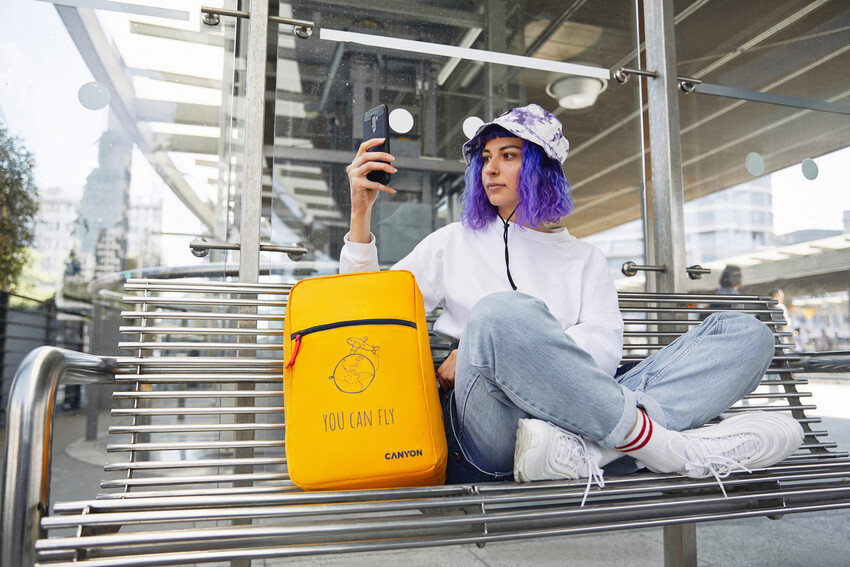
Features That Make a Real Difference
Knowing the right dimensions is only part of the decision. The features and construction of the bag determine how comfortable and practical it is for actual travel.
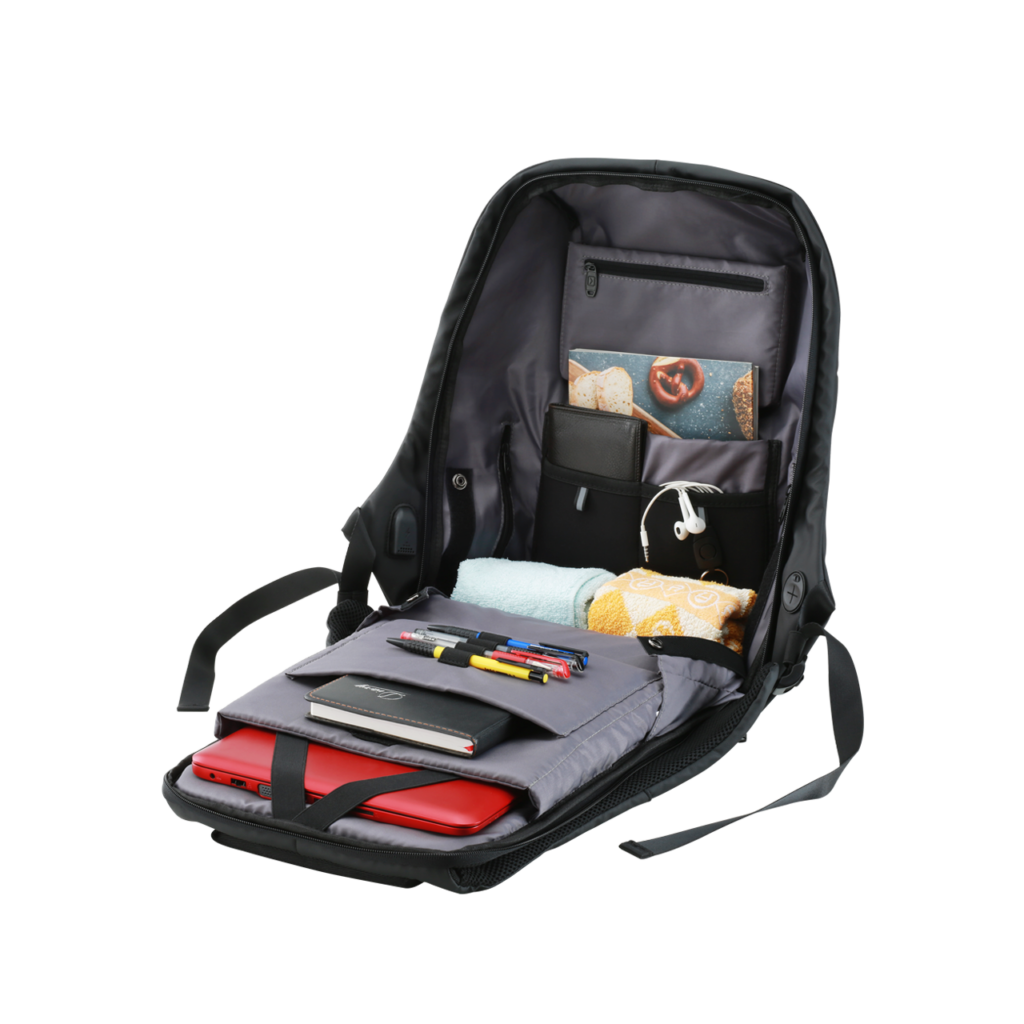
A dedicated laptop compartment is worth prioritising if you travel with a laptop. At security, most airport checks require you to remove your laptop from your bag and place it in a tray separately. A well-designed laptop pocket makes this fast and painless. Look for one that fits up to 15.6 inches, which covers the large majority of laptops in use.
Good organisation matters more than it might seem. A good travel backpack has clearly defined zones — a main compartment for clothes, a quick-access front pocket for documents and chargers, and smaller pockets for things like a boarding pass, passport, or earbuds. Disorganised packing leads to stress at security and rummaging through the overhead bin mid-flight.
Anti-theft features are genuinely useful in busy airports. A hidden zipper on the back panel — accessible only when the bag is off your back — makes a meaningful difference when moving through crowded terminals.
Comfortable carry matters even if you’re only walking between gates. Padded and ventilated shoulder straps reduce fatigue, and ventilation channels prevent the sweaty back that comes with flat, unventilated designs.
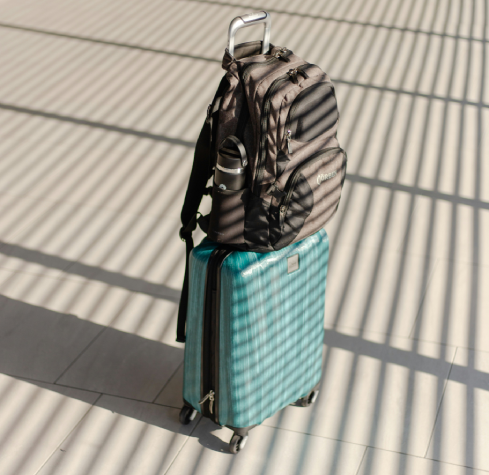
A luggage pass-through strap on the back of the bag — the loop that slips over a suitcase handle — lets you stack the backpack on top of your wheelie bag. If you travel with both checked luggage and a carry-on backpack, this feature is surprisingly useful in airports. Weight saved in the bag itself is weight you can use for clothes or gear, which matters on airlines with cabin baggage weight limits.
Overhead Bin or Under the Seat?
This depends on the size of your backpack and your travel setup. If you’re travelling with a rolling suitcase as your main carry-on and want a backpack as a second bag, you need a small backpack that qualifies as a personal item — small enough to slide under the seat in front of you.
If the backpack is your only piece of cabin luggage, it can fill the carry-on slot and go in the overhead bin. This is the most common setup for travellers who want to skip checked baggage entirely — one well-packed carry on backpack is all you need for trips of three to five days, sometimes more.
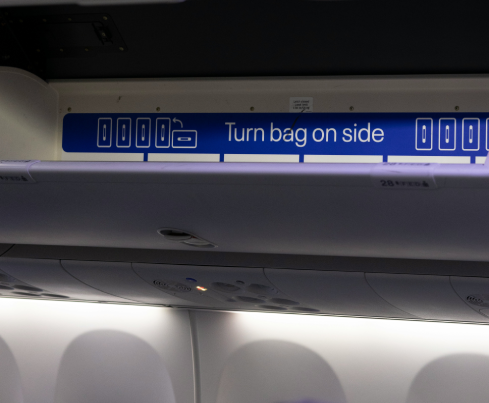
A useful distinction: personal items must fit under the seat regardless of whether the overhead bin is full. If you use a large backpack as your personal item and it won’t fit under the seat, a gate agent can require you to gate-check it or pay a fee. Size matters for both slots.
Packing Smart for the Cabin
Packing efficiently into a carry on backpack is a skill, but it’s learnable. The goal is to maximise what you can carry without exceeding the bag’s dimensions or the airline’s weight limit.
Roll rather than fold your clothes. Rolled clothes take up less space and crease less. For a three-to-five day trip, aim for three to four tops, two pairs of bottoms, and underlayers that can be worn more than once. Merino wool and similar fabrics are traveller favourites because they’re light, compact, and naturally odour-resistant.
Keep all your cables, chargers, and accessories in one dedicated pouch so you can pull it out at security without unpacking everything. Remember the 100ml liquids rule — any liquid, gel, cream, or paste in your carry-on must be in a container no larger than 100ml, with all containers fitting in a single transparent resealable bag of no more than one litre. This applies across virtually all airports worldwide.
Your laptop should go in the dedicated laptop compartment. In-flight essentials — earbuds or headphones, a small snack, and anything you’ll want during the flight — should go into an easily accessible outer pocket, not buried in the main compartment.
Mistakes That Cost Money at the Gate
Overpacking until the bag bulges is the most common one. A backpack that’s technically within size limits but packed so full it’s almost spherical can fail a size check even if the bag itself would pass empty. Airlines measure external dimensions — including any expansion caused by overpacking.
Forgetting the laptop and liquids at security slows down the queue and creates stress. Both often need to come out of your bag at the checkpoint.
Not checking the specific airline’s rules is surprisingly common. There is no universal standard. What works on one carrier can cost you a gate fee on another. Two minutes on the airline’s baggage policy page before you pack is always worth it.
Leaving the weighing until the airport catches many people out. Many airlines have cabin baggage weight limits, especially in Europe and Asia. Weigh your packed bag at home.
Canyon Carry On Backpacks: Built for the Cabin
If you’re looking for a backpack designed specifically for airline travel — including low-cost carriers with tight cabin requirements — Canyon makes three solid options worth considering.
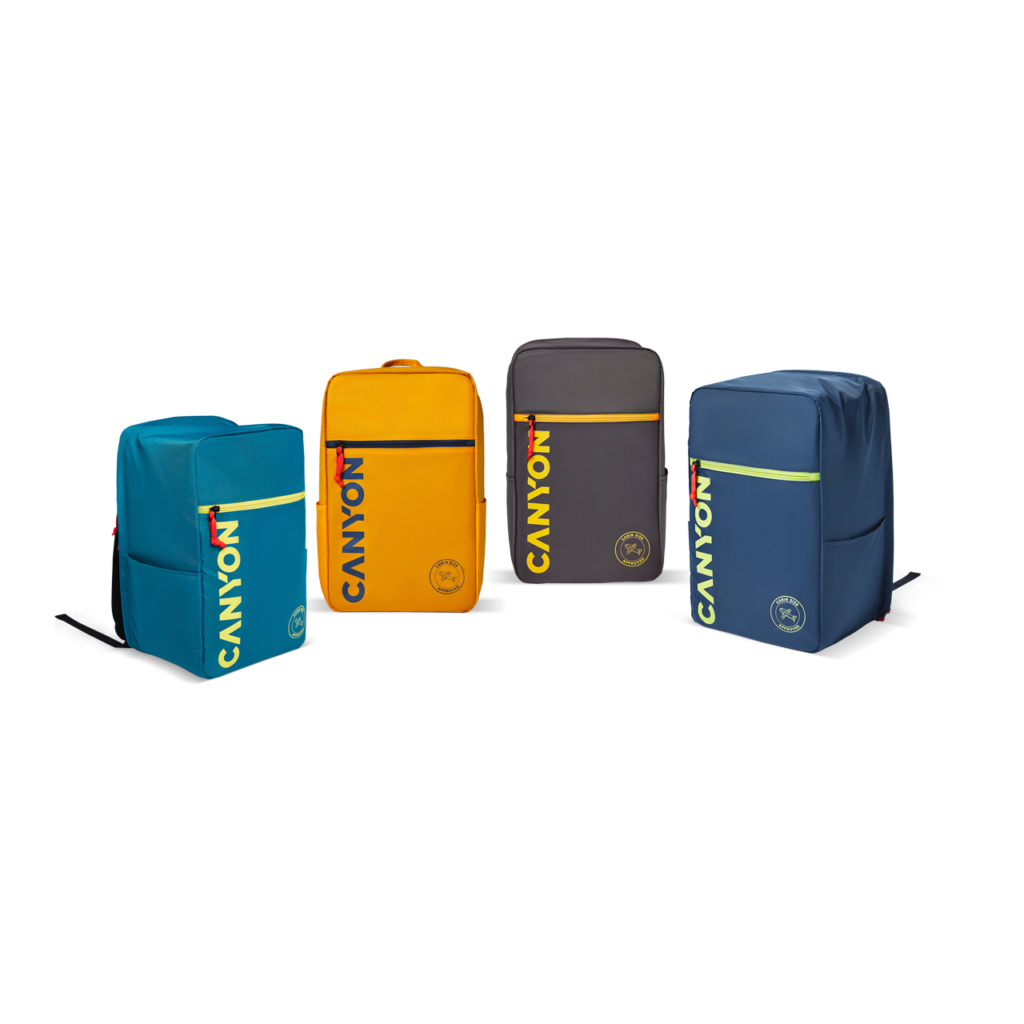
All three Canyon carry-on backpacks share the same airline-optimised dimensions of 20 x 25 x 40 cm, meeting the hand luggage backpack size requirements for low-cost carriers including Ryanair, Wizz Air, Sky Up, and Laudamotion. At 20 litres of capacity, they sit in the sweet spot for short trips: enough space for a few days of clothes plus a laptop, without a gram of wasted bulk.
Each model includes a dedicated 15.6-inch laptop pocket, so you can retrieve your device at security without unpacking the entire bag. An anti-theft hidden zipper on the back panel keeps your valuables secure in crowded airports. The ventilated back panel and padded shoulder straps make them comfortable to carry even on longer travel days. A luggage strap on the back lets the backpack attach over a suitcase handle when you need both hands free.
The Canyon CSZ-02 adds two side pockets and a small internal document compartment — practical for travellers who want quick access to their passport and essentials without opening the main zip.
The Canyon CSZ-03 follows the same cabin-compliant formula in a slightly updated design, available in dark green and yellow colourways.
The Canyon CSZ-01 is the original model in the range, with a hidden main zipper, a dedicated document pocket, and the same 20 x 25 x 40 cm footprint. It also includes a small loop attachment point on the shoulder strap for a carabiner, bottle clip, or glasses case — a detail frequent travellers will appreciate.
Pack Once, Travel Anywhere
The right carry on backpack dimensions for your trip depend on two things: how much you need to pack, and which airline you’re flying. For full-service airlines, backpacks up to around 40 litres will typically pass as carry-on luggage. For budget carriers, a cabin-specific backpack of 20–25 litres in dimensions around 40 x 25 x 20 cm is the safest and most cost-effective choice.
Check your airline’s policy before you pack, measure your bag when it’s full not empty, put your laptop and liquids somewhere accessible for security, and don’t overpack to the point where the bag changes shape. Get those things right and a good carry on backpack genuinely replaces checked baggage for most types of travel — saving you time at the airport, money on baggage fees, and the low-level anxiety of waiting at a carousel wondering if your bag made the connection.


 Angelina