The Science Behind the Magic
You’ve probably set your phone down on a pad and watched it start charging without plugging anything in. It feels almost like magic — but it’s actually physics that’s been around for nearly 200 years. Here’s everything you need to know about wireless charging explained in plain language: how it works, which standards matter, what MagSafe and Qi actually mean, and whether it’s really worth it.
What Is Wireless Charging, Actually?
Wireless charging — also called inductive charging — is a way of transferring electrical energy from a charging pad to your device without a physical cable connecting them. No port, no plug. You place the gadget on a surface and power flows through the air via an invisible magnetic field.
The term “wireless” might make it sound futuristic, but the underlying science — electromagnetic induction — was discovered by Michael Faraday back in the 1830s. He found that moving a magnet near a wire coil generates an electric current. Modern wireless chargers do essentially the same thing, just with considerably more sophisticated engineering behind it.
The everyday version most people are already familiar with? Your electric toothbrush. It has been charging wirelessly in its cradle for decades. The phone version simply applies the same principle to a much more powerful and complex device.
From Pad to Battery: Step by Step
Here’s what actually happens when you place your phone on a charging pad:
- The charging pad is plugged into a wall outlet and receives alternating current (AC) electricity.
- Inside the pad, that current flows through a coiled copper wire — the transmitter coil. This creates an oscillating magnetic field that extends outward from the pad’s surface.
- Your phone, smartwatch, or earbuds have their own smaller receiver coil built in. When placed on the pad, this coil enters the magnetic field created by the charger.
- The changing magnetic field induces an alternating current in the receiver coil — this is inductive charging in action. Energy has transferred from the charger to the device without any physical connection.
- The induced alternating current isn’t ready to charge a battery yet. A rectifier circuit inside your device converts it into direct current (DC), which is what batteries actually use.
- The device’s charging management system regulates the voltage and current, monitors temperature, and delivers the power safely to the battery. The charging station and device communicate throughout this process, constantly adjusting to keep things efficient and safe.
That’s it. Invisible magnetic field, two coils, a bit of clever engineering — and no cable needed.
The Universal Standard
If you’ve looked at a wireless charger, you’ve almost certainly seen the Qi logo. Qi (pronounced “chee,” the Chinese concept of life force or energy flow) is the dominant global standard for wireless charging in consumer electronics. It was developed by the Wireless Power Consortium (WPC), a group of leading technology companies who collaborated to create a universal specification — so that any Qi-certified device can work with any Qi-certified charger, regardless of manufacturer.
The Qi standard launched in 2009, and by 2013, after Samsung adopted it for its Galaxy line, it became the clear winner among several competing approaches. Apple joined in 2017 with the iPhone 8, effectively ending the format wars. Today, Qi is the technology powering wireless charging across the vast majority of smartphones, earbuds, and wearable gadgets on the market.
What Qi actually guarantees: cross-brand compatibility so that any Qi pad works with any Qi phone, safe defined power levels typically between 5W and 15W, smart communication between device and charger for managed power delivery, foreign object detection so your keys don’t quietly heat up on the pad, and coil alignment standards to ensure efficient energy transfer.
Standard Qi delivers up to 15W for compatible devices, though the actual speed you get depends on both the charger and your phone supporting the same power profile. For simpler gadgets like wireless earbuds, expect around 5W — enough for their smaller batteries.
What Changed With the Newer Standard
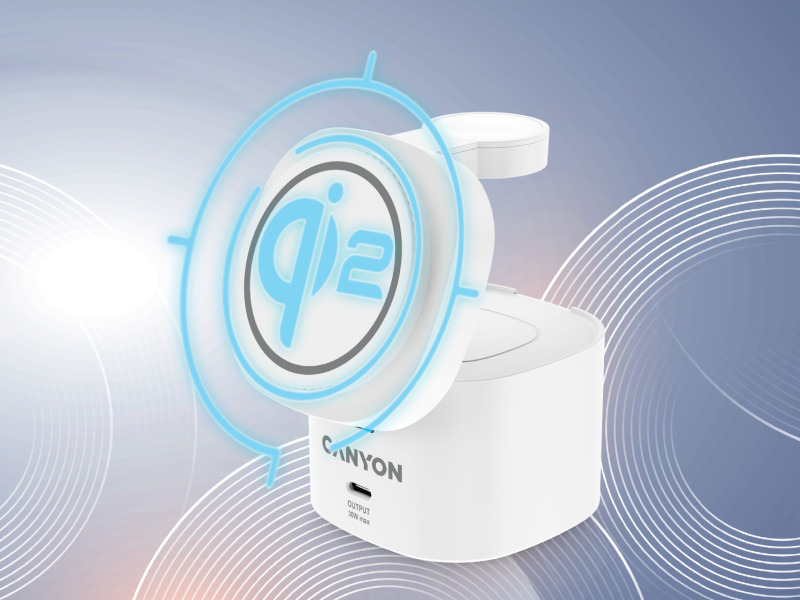
In 2023, the Wireless Power Consortium introduced Qi2 — an updated version of the standard that borrowed a key idea from Apple’s MagSafe technology: magnetic alignment.
With standard Qi, the coils need to be physically close and reasonably well-aligned, but there’s some tolerance. Small misalignments reduce efficiency and slow charging. Qi2 adds a Magnetic Power Profile — a ring of magnets in both the charger and the device that snaps them into perfect alignment automatically. This means more consistent faster charging speeds, less wasted energy as heat, a more satisfying and repeatable charging experience, and cross-brand compatibility for magnetic wireless charging — not just Apple devices.
If you’re buying a new wireless charger today, looking for Qi2 certification is a smart move — particularly if you have a recent phone that supports it.
Apple’s Take on Magnetic Charging
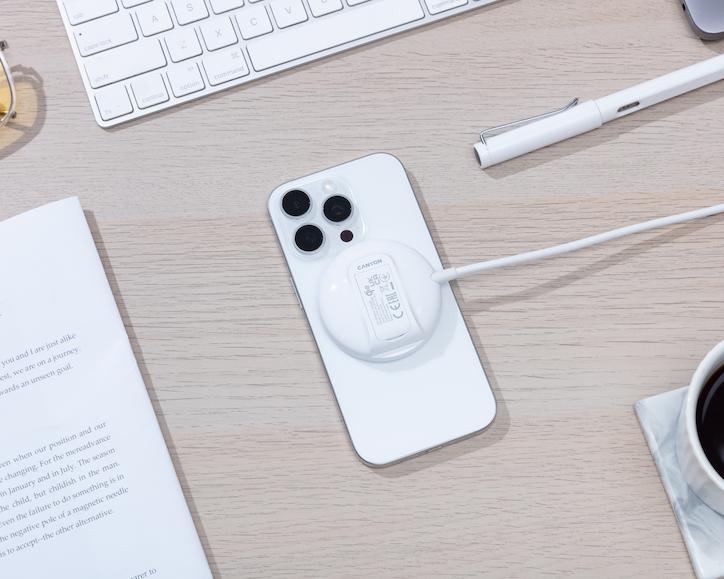
MagSafe is Apple’s proprietary implementation of magnetic wireless charging, introduced with the iPhone 12 in 2020. It uses a ring of magnets embedded around the charging coil to ensure perfect alignment between the iPhone and the charger, accessory, or case.
MagSafe charges at up to 15W on iPhones that support it, and up to 25W on the iPhone 16 with the updated MagSafe charger. It also uses the magnetic attachment for a whole ecosystem of snap-on accessories — cases, wallets, stands, and car mounts — which click into place without any fiddling.
The Qi2 standard was built in close collaboration with Apple and essentially brings the MagSafe alignment concept to the broader Android and accessory ecosystem. So while MagSafe is Apple-only, the underlying magnetic technology is now available to all Qi2-compatible devices.
In summary: Qi is the universal wireless charging standard with wide compatibility up to 15W. MagSafe is Apple’s version with magnetic snap alignment, up to 15–25W, and a broader snap-on accessory ecosystem. Qi2 is the updated universal standard with MagSafe-style magnetic alignment available across brands.
Which Devices Are Compatible?
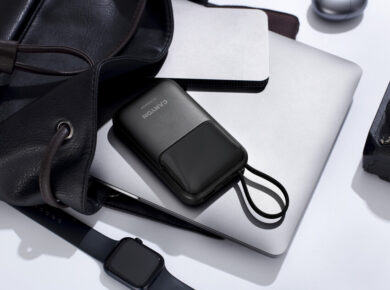
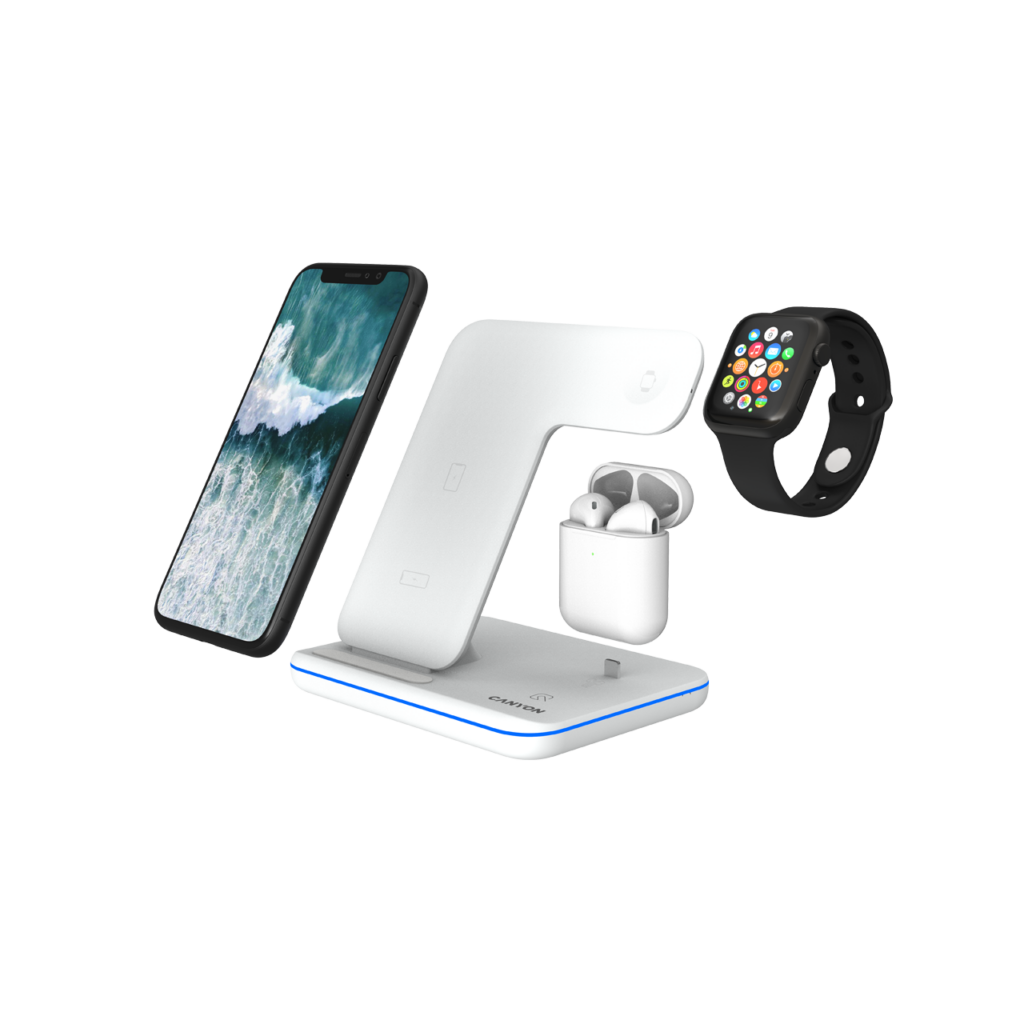
Wireless charging has expanded well beyond smartphones. Today, inductive charging technology powers a wide range of gadgets: smartphones (the most common use case, supported by most flagship and mid-range phones from the past several years), smartwatches (most modern wearables use wireless charging pads or magnetic chargers specific to their design), wireless earbuds (the charging cases of earbuds increasingly support Qi charging on their base), powerbanks (some portable battery packs can be charged wirelessly themselves and can wirelessly charge your phone in return), tablets (certain models now include wireless charging support), and laptops (still rare, but starting to appear in high-end ultrabooks).
To check if your phone supports wireless charging, look for “Qi wireless” or “wireless charging” in its specifications. On Android you can also check Settings — if a “Wireless charging” toggle exists, you’re good. iPhones from the iPhone 8 onward all support Qi charging.
Cable or No Cable: The Real Trade-Off
The honest answer is that they each have a clear role — and most people end up using both.
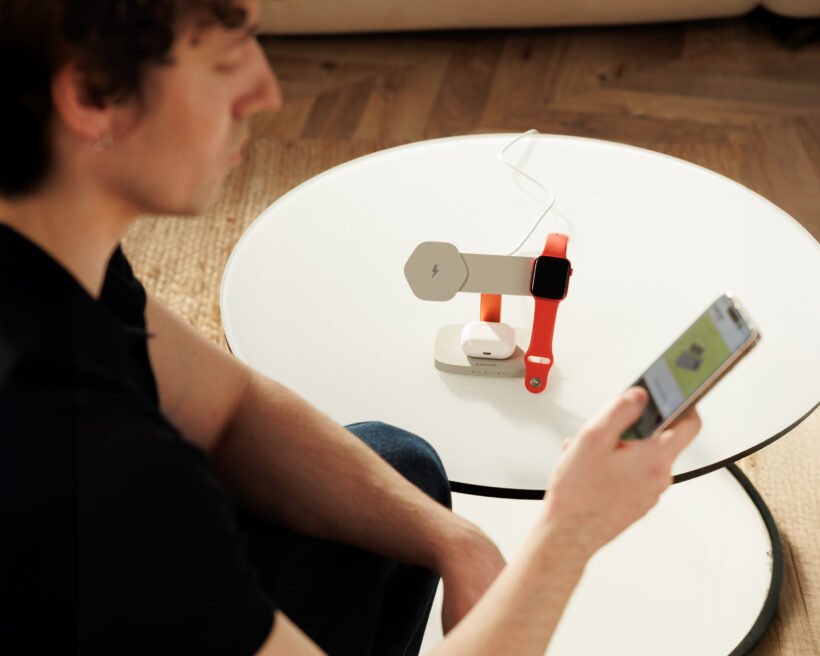
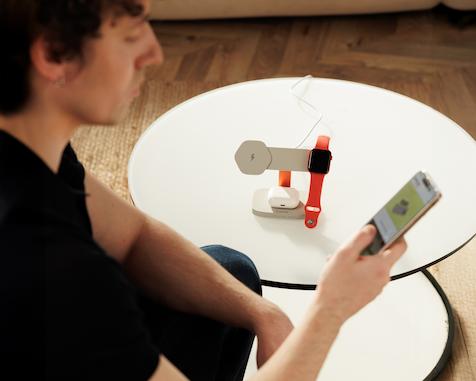
Where wireless wins: convenience — set the phone down on your desk or nightstand and it charges without thinking about it. No cable wear — repeated plugging and unplugging slowly damages the charging port over time; wireless eliminates this entirely. Desk hygiene — a charging station or pad keeps your surface cleaner and neater than a pile of cables. Multi-device charging — a single pad or station can charge your phone, earbuds, and smartwatch simultaneously.
Where wired still leads: speed — a wired charger still delivers power faster, especially for fast-charging standards that hit 45W, 65W, or beyond. Efficiency — wireless charging uses more energy overall due to heat losses in the transfer process; not significant for individuals, but worth knowing. Range — you need to be on or very near the pad, whereas a cable gives you flexibility to hold the phone while charging.
The best approach for most people: wireless charging on your desk and nightstand for top-up and overnight charging, wired when you need a fast battery recovery.
Safety, Heat, and What to Watch Out For
Yes, wireless charging is safe — at least when using certified equipment. The Qi certification exists specifically to enforce safety standards around heat management, electromagnetic field limits, and power regulation.
A few things worth knowing: heat is normal, hot is not. Wireless charging generates more heat than wired charging due to energy losses in the transfer process. Your device getting warm is expected. If it becomes uncomfortably hot, try removing the case — thick or metallic cases can trap heat — check that the phone is properly aligned on the pad, and avoid charging in direct sunlight or on soft surfaces that block airflow.
Metal objects need to stay off the pad. Coins, keys, or other metal items caught between your device and the charger can heat up due to the electromagnetic field. Quality chargers include foreign object detection that stops the charging process when this happens — another reason to choose certified accessories over no-name alternatives.
As for battery longevity: wireless charging generates slightly more heat than wired, and prolonged heat exposure can affect long-term battery health over years of daily use. Using a charger with smart power management — which backs off power delivery when the battery is nearly full — helps considerably.
Getting the Best Results from Your Setup
Getting wireless charging to work reliably is simple once you know the basics.
Alignment matters. The transmitter and receiver coils need to overlap. Most pads have a sweet spot, usually marked or centred on the surface. Take a second to position your device rather than just dropping it anywhere — misalignment is the most common reason for slow or failed charging. Qi2 chargers with magnets remove this problem entirely.
Check your case. Most plastic and silicone cases are fine and won’t interfere with wireless charging. Thick cases can slow the rate slightly. Metal cases or cases with metal plates can block the magnetic field altogether. If your charger stops working after you get a new case, that’s likely why.
Match your power adapter to the charger. The charging pad draws power from a standard adapter, but that adapter needs to supply enough wattage for the pad to reach its maximum output. A 5W USB adapter won’t enable 15W charging speeds, regardless of how capable your phone or pad might be. Most quality chargers specify the recommended adapter in the box.
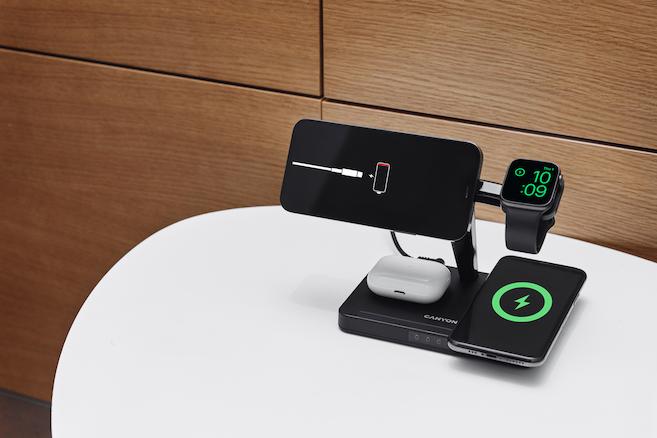
Use the right charger for the right spot. A flat pad is great for a desk — quick to place and easy to grab. A stand that props the phone upright is better for a nightstand, so you can see notifications without picking it up. A multi-device charging station is the best solution if you want to charge your phone, smartwatch, and earbuds from a single tidy point on your desk.
Is Wireless Charging Worth It?
Wireless charging is one of those technologies that, once you start using it consistently, is genuinely hard to give up. The combination of convenience, reduced cable wear, and a cleaner desk setup makes it a meaningful upgrade to daily life — even if it never fully replaces a fast cable for emergency top-ups.
The key things to remember: inductive charging and Qi charging mean essentially the same thing for everyday use. Qi is the standard; Qi2 improves on it with magnetic alignment. MagSafe is Apple’s version of the same idea. And as long as you use certified equipment and keep metal objects off the pad, wireless charging is completely safe and built to last.
Whether you’re setting up your first wireless charger or building out a full desk charging station, the technology is mature, affordable, and genuinely worth it.

 Tatyana Ryzhova


 Angelina