Your phone dies at the worst moment. Your laptop hits 5% during a client call. A portable power bank fixes both. But like every rechargeable battery, it wears down a little every time you use it. Knowing how that wear works helps you buy the right one and get more years out of it.
How long does a power bank last?
Like laptop and phone batteries, a power bank has a set number of charge cycles before its capacity drops off. A full cycle means charging from 0% to 100% and running it back down to 0%, and it doesn’t have to happen in one sitting: two 50% charges add up to one cycle, and four 25% top-ups do too.
How many cycles you get depends on the chemistry inside. Standard lithium-ion cells, the type in most power banks, hold 80% of their original capacity for roughly 300 to 500 cycles. Lithium iron phosphate (LiFePO4) cells push that number to 2,000 or more; see the chemistry comparison further down.
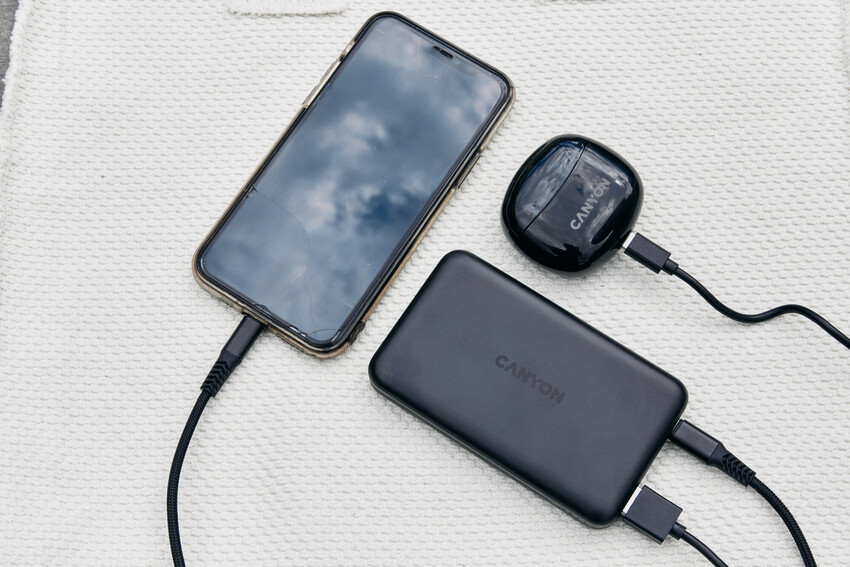
How long does a charged power bank hold its charge?
A good lithium-ion power bank self-discharges slowly, usually 2–5% a month, so a fully charged one can sit in a drawer for months and still work when you grab it. LiFePO4 units self-discharge even slower. What drains it faster than sitting idle is heat and humidity: keep it out of direct sun, off a hot car dashboard, and away from damp bags.
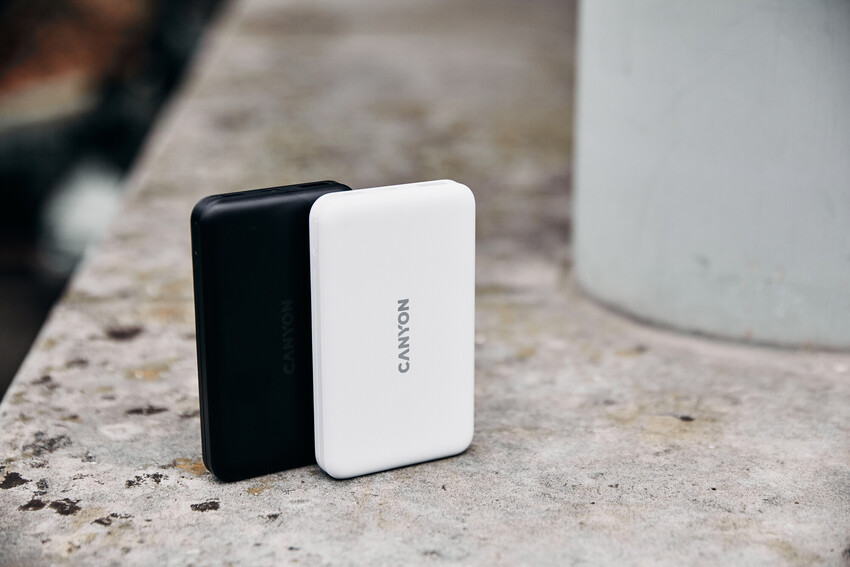
What affects battery longevity the most
The single biggest factor is the cell inside the pack. For years, that meant an 18650 cylindrical cell, the same size used in most laptop batteries, and a typical 10,000mAh power bank needed three or four of them. That’s shifting: the 21700 cell, about 20% larger, holds more energy per cell, so two 21700 cells can now do what used to take three or four 18650s. The tradeoff is a slightly bigger, heavier pack, but better heat dissipation and often a longer cycle life.
A newer option, still uncommon in 2026 but appearing in flagship power banks, uses a silicon-carbon anode instead of the usual graphite one. Silicon holds far more lithium ions than graphite by volume, so a bank can pack the same capacity into a smaller, lighter shell: Nitecore’s NB10000 Gen4 fits 10,000mAh into 143 grams, about a third lighter than a standard lithium-polymer bank of the same capacity.
Capacity plays a role too. A higher-mAh power bank spreads the workload across more cells, which eases the wear per cycle and often means fewer full recharges over its working life for the same amount of device charging.
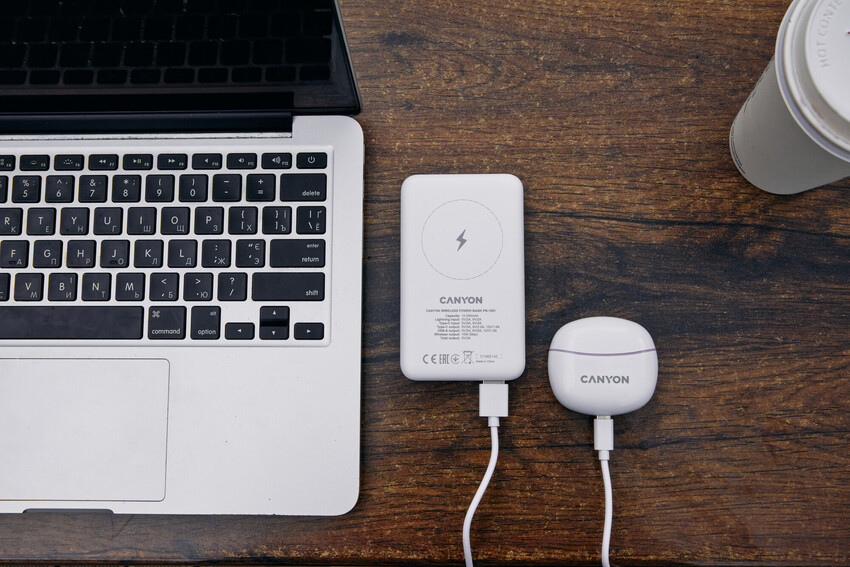
Charging speed, USB-C PD, and heat
Fast charging is convenient, but heat is what ages a lithium battery early, and higher wattage means more heat. USB Power Delivery (USB-C PD) is the protocol behind most fast charging today, and the newest version, PD 3.1, raises the ceiling from 100W to 240W for laptops and other power-hungry devices. Most phones and power banks still run in the 18–65W range, and that’s fine: sustained heat from very high wattage ages a cell, not the number printed on the box.
A power bank running warm during a fast charge is normal. If it gets hot enough to be uncomfortable to hold, charge at a lower wattage when you’re not in a rush, and give it airflow instead of tucking it under a pillow or inside a sealed bag.
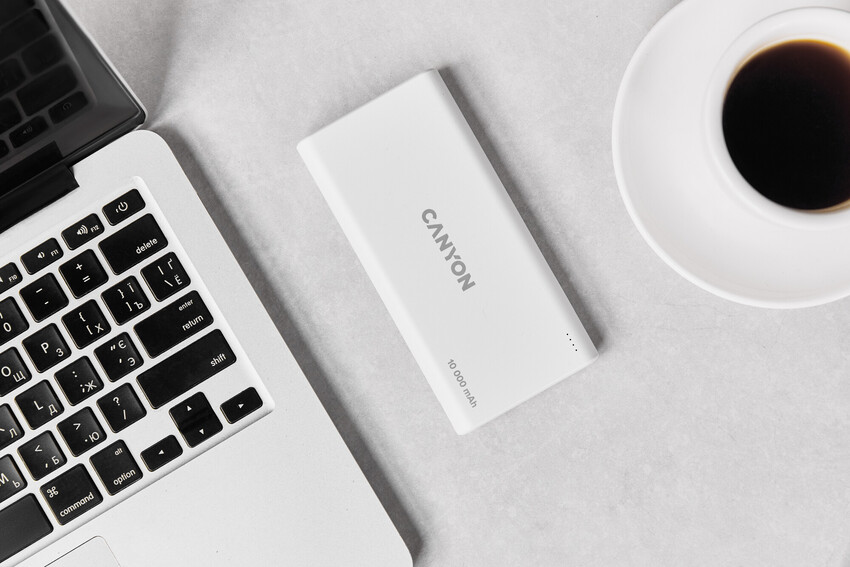
Types of power banks and how long each one lasts
Solar power banks
These carry both a battery and a solar panel, so lifespan depends on both. Panel efficiency fades slowly over years of sun exposure, while the battery follows the same cycle limits as any other lithium-ion pack.
Wireless charging power banks
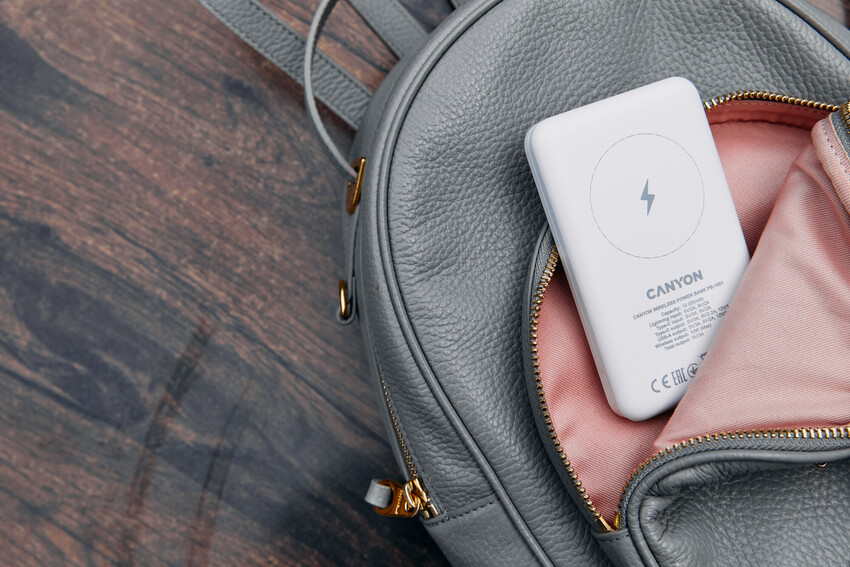
Original Qi charging topped out around 7.5–10W and needed careful phone placement to hit full speed. Qi2, now standard on most new wireless power banks, adds a ring of alignment magnets and a consistent 15W across certified devices, so placement stops being a guessing game. Qi2.2, the newest revision, pushes that to 25W on supported phones. This doesn’t change the battery’s underlying cycle life, but less wasted energy from misalignment means fewer wasted cycles over time.
Power banks with built-in cables
Convenient, but the cable is a mechanical part that wears with repeated folding and plugging, often before the battery itself degrades.
High-capacity power banks
More cells share the load, so these tend to hold up better under daily use, though they’re heavier, and if rated 100Wh or above, subject to the airline rules below.
LiFePO4 power banks
Still a minority of the market, but growing, especially for outdoor, off-grid, and CPAP use where longevity matters more than raw energy density. See the comparison below.
Battery chemistry compared
| Chemistry | Cycle life (to 80%) | Typical real-world lifespan | Weight/size for the same mAh | Best for |
| Standard lithium-ion (Li-ion / NMC) | 300–500 cycles | About 2–3 years of daily use | Lightest and most compact | Everyday phone and tablet charging |
| LiFePO4 (LFP) | 2,000–4,000+ cycles | 7–10 years of daily use | Heavier and bulkier per mAh | Off-grid trips, CPAP machines, frequent daily use |
| Silicon-carbon anode | Similar to standard Li-ion; chemistry still maturing | About 2–3 years of daily use | Lightest of the three per mAh | Travel and everyday carry where size matters most |
Charging habits that extend, or shorten, its life
Battery type and capacity set the ceiling, but daily habits decide whether you actually reach it. Avoid the extremes: letting a lithium-ion battery sit at 0% or 100% for long stretches stresses the cell chemistry, while keeping it roughly between 20% and 80% for daily use adds real years to its working life.
Partial charges also count for less than full ones. Charging from 0% to 50% twice, 0% to 33% three times, or 0% to 25% four times all add up to about one full cycle, not several, so topping up throughout the day is easier on the battery than running it to empty and back.
New in 2026: airline rules for power banks
If you travel, this affects you directly. In March 2026, the International Civil Aviation Organization introduced the first coordinated global limits on power banks in aircraft cabins: a maximum of two power banks per passenger, and no recharging them once you’re on board. Power banks under 100Wh need no special approval, those between 100Wh and 160Wh require the airline’s prior sign-off, and anything over 160Wh isn’t allowed on passenger flights at all. Most 10,000–20,000mAh consumer power banks sit well under 100Wh, so casual travelers won’t notice much change, but frequent flyers should pack two solid-capacity banks rather than four small ones.
Airlines have also tightened where you can stow one: keep it in the cabin, not a checked bag, and increasingly out of the overhead bin so crew can reach it fast if it overheats. The rule that hasn’t changed: power banks never travel in checked luggage, only carry-on.
Signs your power bank is failing
Watch for these, and retire the unit the moment you spot one:
- Swelling or bulging in the casing
- Getting hot at rest, not just while charging
- Any smell of smoke, or visible smoke
- Won’t hold a charge, or drains unusually fast
A swollen lithium battery is a fire risk, not just a performance problem. Stop using it, don’t puncture or crush it, and take it to a battery recycling point rather than the trash.
Tips to make it last longer
- Avoid extreme heat and cold; room temperature suits both use and storage
- Don’t run it down to 0% or leave it pinned at 100% for long periods
- Keep it away from humidity
- Go easy on pass-through charging (charging the bank and a device from it at once), which runs both circuits hot
- Store it somewhere dry and cool when it’s not in use
One port, most jobs: USB-C
A USB-C port supports high-speed data transfer, fast charging, and bidirectional power, so your power bank can charge another device and get charged itself through the same port. That versatility is why USB-C has become the default across phones, laptops, and accessories.
Worth knowing if you’re comparing specs: starting August 2026, EU rules require a battery’s advertised capacity to come from actual lab testing, not from adding up the theoretical capacity of the cells inside. The number on the box should now line up more closely with what you actually get.
The bottom line
A power bank isn’t built to last forever, but the right chemistry, sensible charging habits, and a bit of care around heat and humidity can add real years to its useful life.
Take a look at CANYON’s power bank lineup, and find more charging tips on the CANYON blog.