Smartwatch vs Phone for Kids
Sooner or later, your child starts asking for a phone. Maybe a classmate got one for their birthday. Maybe your kid has just started walking to school alone, and you realise you have no way to reach them between 8 a.m. and 3 p.m. Either way, the question lands on your table, and the answer is simpler than it looks.
The short version: for most children under 10, a kids smartwatch covers everything that really matters. They can call you, you can see where they are, and there’s no internet, no social media and no endless scrolling. A phone starts to make sense around 12 or 13, when school group chats, travel apps and more independence become part of everyday life. Below you’ll find a side-by-side comparison, an honest look at each device and an age-by-age guide to help you decide.

Smartwatch vs Phone for Kids at a Glance
| Criterion | Kids smartwatch | Phone | Best for |
| Calling & messaging | Calls and short messages to parent-approved contacts only | Calls, texts and messaging apps with anyone | Watch for control, phone for social life |
| GPS tracking | Built in, with live location and safe zones in the parent app | Available through apps, but a child can switch it off | Watch |
| Internet & app access | None or very limited, no app store | Full browser, app stores, social media | Phone, for older kids |
| Screen time risk | Low: small screen, a few simple games | High: videos, games, social feeds | Watch |
| Durability | Rugged, often IP67 water and dust resistant, hard to lose on the wrist | Fragile, easy to drop or leave behind | Watch |
| Cost | Usually well under €150, plus an inexpensive SIM plan | Often €150–1,000+, plus a data plan | Watch |
| Best age range | 5–11 | 12–13+ | Depends on the child’s maturity |
If what you mostly want is to reach your kid and know they got to school, the watch column wins. If your child needs messaging apps for homework or a transport app to get across town, you’re heading into phone territory.
What a Kids Smartwatch Offers
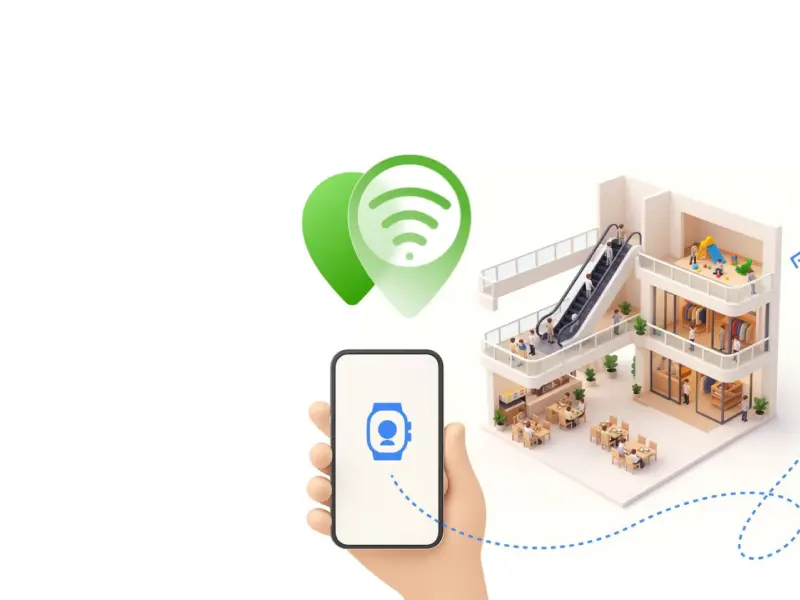
Think of a kids smartwatch as a tiny phone with the risky parts removed. It takes a nano SIM or an eSIM, so your child can make and receive calls without carrying anything else. You manage everything from an app on your own phone. With Canyon watches that’s the Canyon Life app, where you add allowed contacts, set up safe zones and check your child’s location on a map.
The features that make a difference day to day:
- Approved contacts only. Unknown numbers simply can’t get through.
- GPS and safe zones. You get a notification when your child leaves school or arrives home.
- SOS button. One long press calls or alerts the parents.
- School mode. The watch stays silent during lessons.
- Water and dust resistance. Many models are rated IP67, so rain, puddles and hand-washing are no problem.
- Video calls on models with a front camera, which younger kids love.
Before buying, weigh the pros and cons: smartwatch for kids models are built for safety, not for entertainment. Typing on a 1.4-inch screen is awkward, so kids mostly use voice messages. The battery lasts one to two days, which means charging it every night becomes part of the routine. You’ll need a SIM plan, although a basic one is usually enough. Indoor location can be less precise than outdoors. And by 11 or 12, some kids start to feel the watch is “for little ones.”
Even with those limits, many parents see the watch as a first phone for kids alternative. It gives you two or three extra years before the smartphone conversation, while your child still gets real independence. If you’re not sure which SIM option to choose, our guide on why kids need a smartwatch with eSIM explains the difference, and the article on tracking devices for kids covers other ways to keep an eye on location.
What a Smartphone Offers
A phone does things a watch can’t. It gives access to class group chats, school platforms and homework apps, maps and public transport schedules, a proper camera for projects and hobbies, music and podcasts. It also sends a message that you trust them. For a teenager who crosses the city alone or has an after-school job, a phone is genuinely useful.
The downside is that a smartphone opens the door to the whole internet. That means social media, possible contact with strangers, content that isn’t age-appropriate and apps designed to keep you scrolling. Parental controls exist (Screen Time on iPhone, Google Family Link on Android), but you have to set them up, keep them updated and watch for workarounds, which teenagers tend to find quickly. On a watch, the limits are built into the device. On a phone, they’re a layer you have to maintain yourself. There’s also the practical side: cracked screens and phones left on the bus are expensive lessons.
Smartwatch or Phone by Age: A Practical Breakdown
Parents often ask when should kids get a smartwatch and when it’s time to move on to a phone. Age is a helpful guide, but readiness matters more. Does your child go places without an adult? Do they keep track of their things? Do they follow rules you’ve agreed on? As for what age is right for a kids smartwatch, most families start between 5 and 7, when the first moments without a grown-up nearby appear. Use the ranges below as a starting point, not a strict rulebook.
Ages 5–7: Smartwatch Only
This is the age of first sleepovers, after-school clubs and afternoons at the playground with grandparents. What a child needs here is simple: press a button and call mum or dad. What you need is to see where they are. A watch with big icons, a short contact list and an SOS button covers it. A phone would be far more than necessary, and there’s a good chance it wouldn’t survive the first month.
Ages 8–10: Smartwatch, With Exceptions
Kids start walking to school alone and visiting friends down the street. A watch still fits best, and a model with video calls and messages feels grown-up enough for this age. A phone might be justified in some situations: long solo trips on public transport, splitting time between two homes, or a medical condition that relies on a phone app. Even then, a basic phone without internet is often a better first step than a smartphone.
Ages 11–13: The Transition Zone
This is the hardest stage. Middle school brings group chats and the famous “everyone else has a phone.” You have three realistic options: keep a 4G watch with eSIM for another year, hand over a basic phone for calls and texts, or give a smartphone with strict controls and no social media. It helps to talk to other parents in the class. When several families agree to wait together, the pressure on each child drops noticeably.
Ages 13+: When a Phone Usually Makes Sense
Most teenagers are ready for a phone by now, and most major social platforms set 13 as their minimum age anyway. The watch doesn’t have to disappear, though. It stays handy for sports practice, swimming, hiking or trips where a phone could get lost or broken.

How to Make the Transition Easier
- Go step by step. Watch, then a watch with eSIM or a basic phone, then a smartphone with a few approved apps, then more freedom over time.
- Use an in-between device. A 4G watch with eSIM, such as the Canyon Zefir KW49, adds video calls and messaging without an app store.
- Write down an agreement together. Decide where the phone stays at night, which apps are allowed and what happens if rules are broken. Kids respect rules they helped create.
- Start strict, then relax. Loosening restrictions later is much easier than tightening them.
- Charge devices outside the bedroom. It protects sleep and removes late-night scrolling.
- Set the example. If you check your phone at dinner, expect your child to do the same.
Conclusion
There’s no single right answer. The best device is the one that matches what your child actually does, not what their classmates have. For younger kids, a smartwatch gives you safety and contact without the screen-time battles. For teenagers, a phone becomes a practical tool, ideally introduced gradually and with clear rules. If you’re at the start of that journey, take a look at the range of Canyon kids smartwatches and find a model that fits your child’s age and routine.