How to Choose a Power Bank
You want your phone to last the whole day. The shop shelf holds forty boxes, and each one shows numbers like 20000 mAh, 22.5W, PD and QC 3.0. If you’re working out how to choose a power bank for the first time, four things decide it. Match the capacity to the device you charge, and match the output power to the charging speed you want. Then check that the ports fit your cables, and buy from a brand that lists its safety certifications. Start with the table and then read the part that matches your situation.
Power Bank Buying Guide at a Glance
| What you need to charge | Recommended capacity | Recommended output | Typical scenario |
| Phone, daily top-ups | 5,000–10,000 mAh | 20 W | Commute, workday |
| Phone + earbuds or smartwatch | 10,000 mAh | 20–30 W | Weekend away |
| Tablet | 20,000 mAh | 30–45 W | Long train ride |
| Laptop | 20,000–27,000 mAh (under 100 Wh) | 65–100 W+ | Business trip |
| Several devices on a trip | 20,000–27,000 mAh | 45–65 W, 3 ports | Holiday, family travel |
| Backup for outages | 20,000 mAh+ | 18–30 W | Power cuts, camping |
Use the table as a shortlist of what to look for when buying power bank models. Capacity and wattage come first. Ports and extras come after those two.
Battery Capacity: How Many mAh Do You Actually Need?
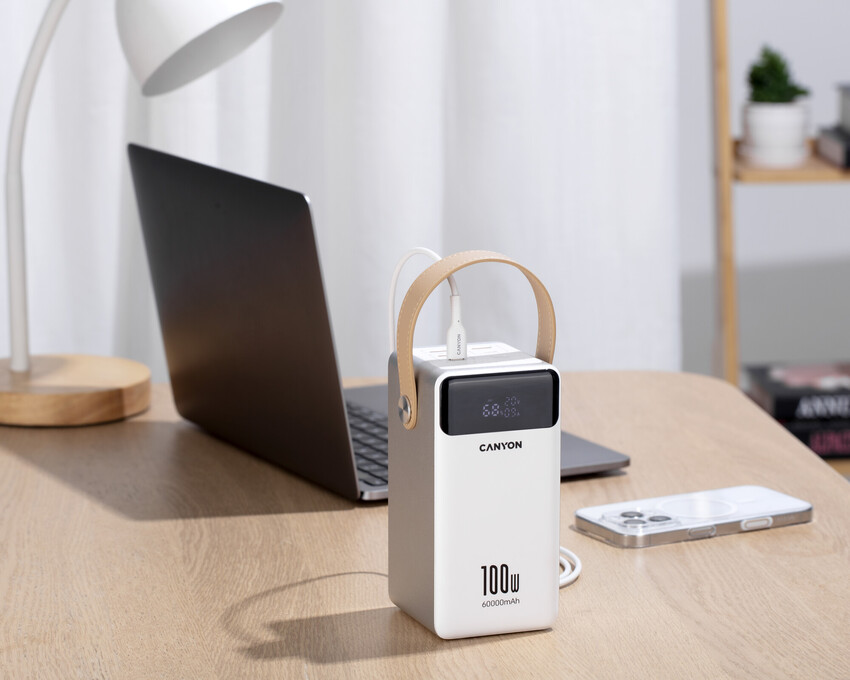
The headline number on the box shows capacity in milliamp-hours (mAh). Flip the device over and read the power bank specification printed on the case, and you’ll also find a figure in watt-hours (Wh). Wh gives the more honest picture because it accounts for voltage. To convert, use this formula: Wh = mAh × 3.7 ÷ 1000. A 10,000 mAh battery holds about 37 Wh.
Your phone never receives the full amount. The power bank loses energy when it converts the 3.7 V of its cells into the 5–9 V your phone accepts, and some of that energy turns into heat. Expect 60–70% of the rated battery capacity to reach your device.
So how many mAh do you need in a power bank for a phone? Most current phones carry 4,000–5,000 mAh batteries. With those losses, a 10,000 mAh model gives you about 1.5 full charges, and a 20,000 mAh model gives 2.5 to 3. To estimate how many times a power bank can charge a phone, divide the power bank’s Wh by your phone’s Wh and multiply by 0.65. You’ll find your phone’s battery Wh in the tech specs on the manufacturer’s website.
Output Power: Why Wattage Matters More Than You Think
Capacity tells you how much energy you carry. Output wattage sets how fast that energy reaches your phone. A basic 10 W port refills an iPhone in over two hours. A 20 W USB-C port takes it to 50% in about half an hour.
Fast charging comes in two main standards. Power Delivery (PD) runs over USB-C and supports iPhones, most Android phones, tablets and laptops. Quick Charge (QC) comes from Qualcomm and shows up on many Android phones with USB-A cables. A power bank with both standards will charge almost anything in your bag.
Laptops ask for more. A 13-inch ultrabook needs 45–65 W, and a larger work laptop needs 65–100 W. With less power, the laptop charges slowly or keeps draining while you work.
Check the input wattage as well. A 20,000 mAh power bank with a 10 W input needs 8–9 hours to refill. At 18–20 W, you top it up in 4–5 hours. Large models with 60 W+ PD input recharge in about two hours.
Ports and Compatibility
USB-A is the classic rectangular port, and plenty of older cables and earbuds still use it. USB-C is the smaller oval port on nearly all new phones and laptops. A USB-C PD port works in both directions, so one cable charges your phone and refills the power bank.
Multiple ports let you charge a phone and earbuds together, but the power bank splits its total output between them. A model rated at 65 W might give 45 W to one port and 20 W to the other when you plug in two devices. Read the per-port figures on the spec sheet before you buy.
Pass-through charging lets you plug the power bank into the wall and charge your phone from it at the same time. It helps in hotel rooms with a single free outlet, though the power bank runs warmer in this mode.
Size, Weight, and Portability
Weight grows with capacity. A 10,000 mAh model weighs around 200–250 g and fits in a jacket pocket. At 20,000 mAh you’re carrying 350–450 g in a bag, and at 27,000 mAh you’re close to half a kilo.
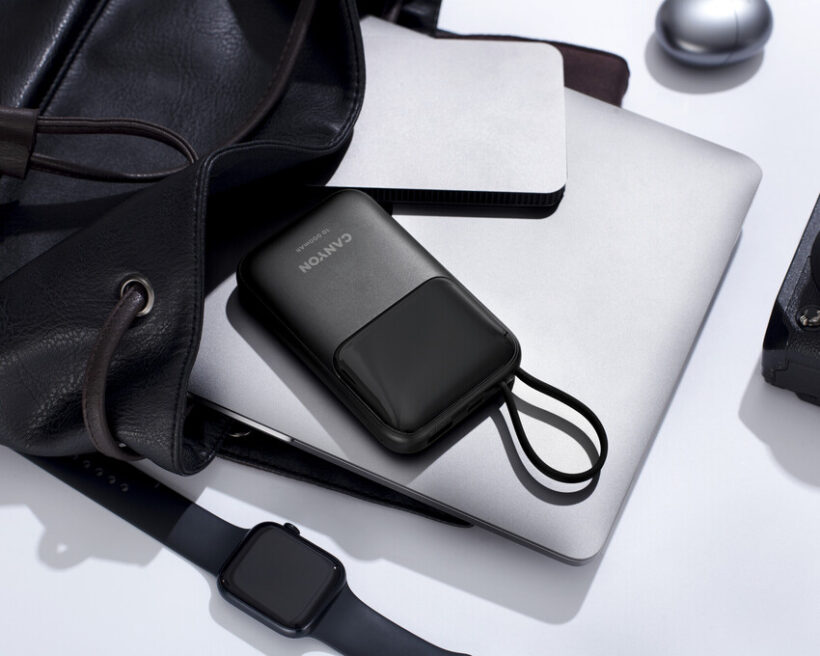
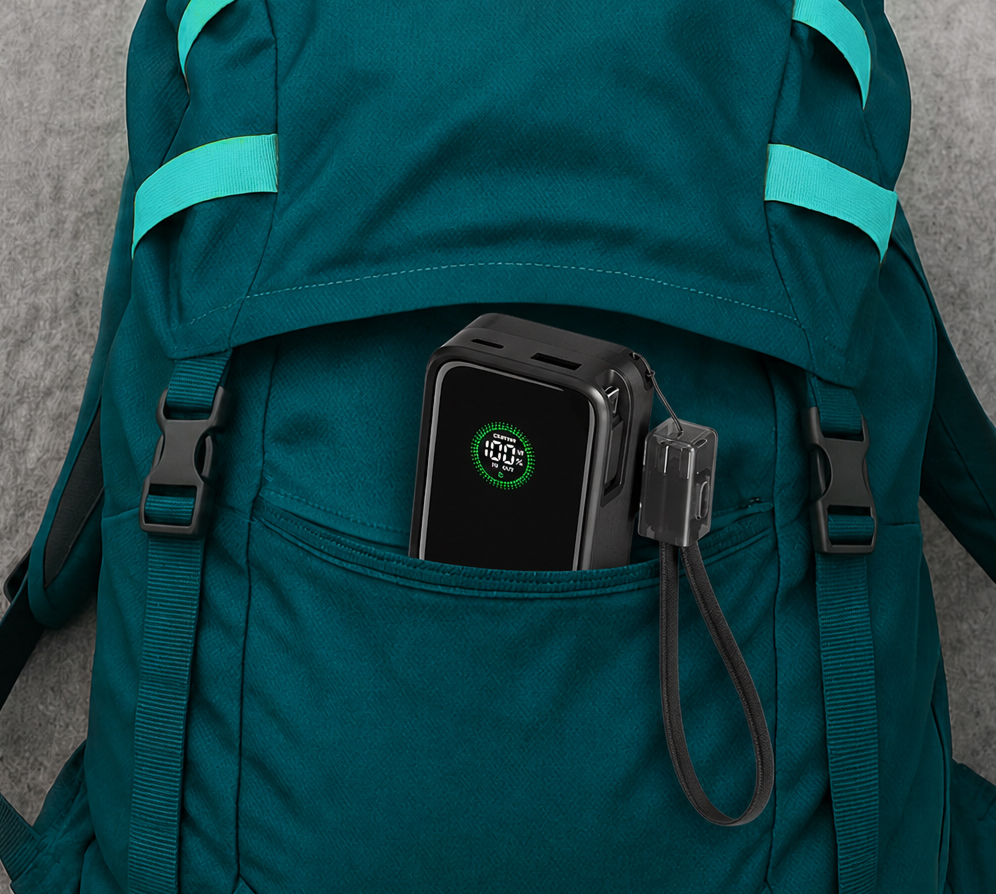
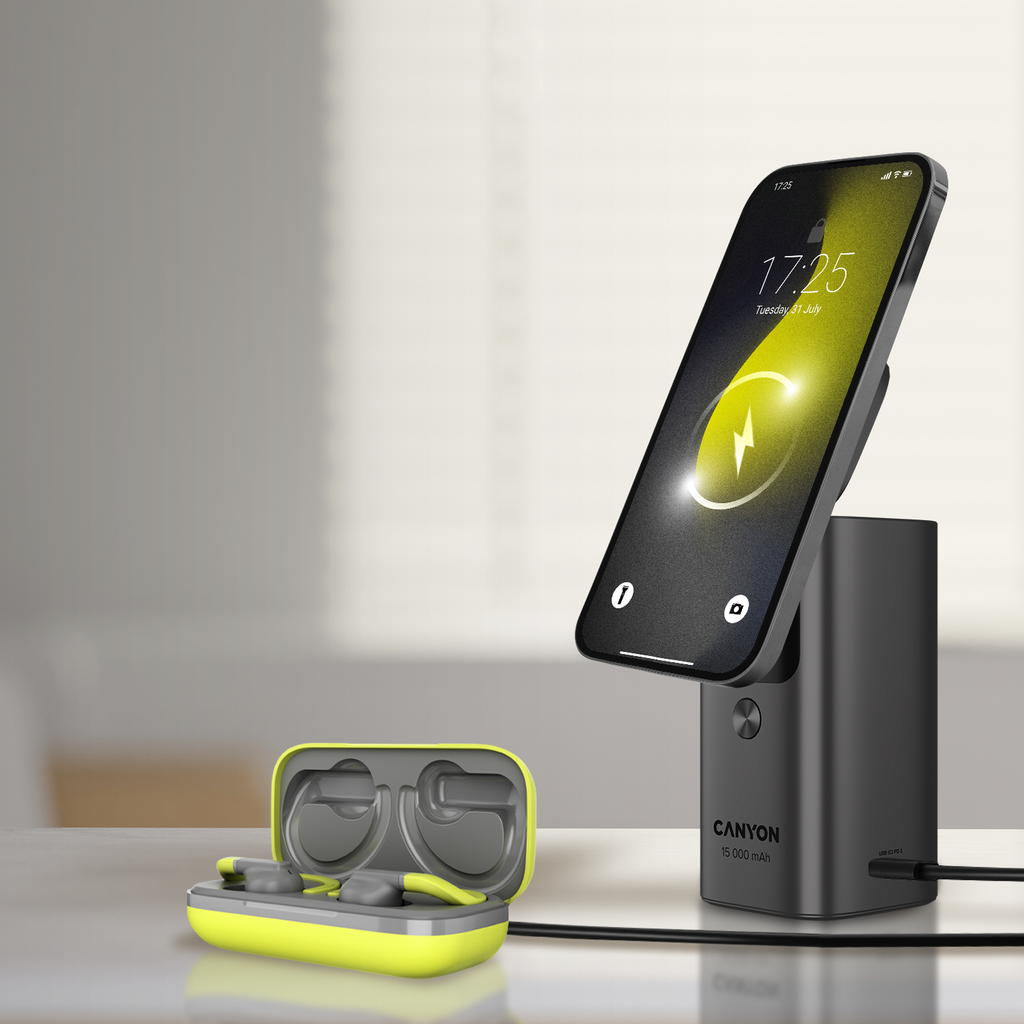
Each power bank type suits a different routine. Slim 5,000–10,000 mAh models work for the daily commute. Magnetic models snap onto the back of your phone for quick top-ups. High-capacity models with USB-C PD handle laptops and long trips.
Flying adds its own rules. Airlines let you bring power banks up to 100 Wh (about 27,000 mAh) in hand luggage without approval. Models between 100 and 160 Wh need the airline’s permission, and no power bank may go in checked bags. If you’re figuring out how to choose a portable charger for travel, check the Wh figure on the label before you pay. Our guide to power bank rules for airplanes covers the details.
Safety and Certification
A power bank packs a lot of energy into a small case, and its protection circuit keeps that energy under control. Before buying, check three things:
- Certification marks. CE confirms the product meets EU safety requirements, FCC covers the US market, and UN38.3 shows the battery passed lithium transport tests.
- Protection types. Good brands list protection against overcharging, over-discharge, short circuits, overcurrent and overheating on the box or product page.
- Honest numbers. A 20,000 mAh power bank can’t weigh 150 g. If the weight looks too low for the claimed capacity, or the case shows no Wh figure, expect inflated specs.
Power Bank Buying Guide by Use Case
Best Power Bank for Everyday Phone Use
For commuting and a normal workday, 10,000 mAh with an 18–20 W USB-C port covers your phone with margin to spare. It’s light enough that you stop noticing it in your bag. Canyon PB-107 fits this profile with 18 W output over Power Delivery and Quick Charge 3.0.
Best Power Bank for Travel and Flights
Stay under 100 Wh, and pick a model with at least one USB-C PD port and two or more outputs. Canyon OnPower 2010 holds 97.2 Wh and charges laptops at up to 140 W. It clears airport security and covers a laptop, a phone and earbuds on the same trip.
Best Power Bank for Laptops and Multiple Devices
If you’re deciding how to choose best power bank for a laptop, start with wattage. Most laptops need 65 W minimum, and larger models need 100 W. Pair that with 20,000–27,000 mAh and two or three ports. A 27,000 mAh model gives you roughly one full laptop charge.
Best Power Bank for Emergencies and Outages
During a blackout, you need capacity more than speed. A 20,000 mAh model keeps two phones running for a day or two. A built-in flashlight helps. Store the power bank at 50–80% charge and top it up every two to three months, since lithium cells age slower at partial charge.
Conclusion
Start with the energy your devices need, then match the output wattage to the most demanding one. Confirm the ports and certifications last. Canyon power banks cover each scenario above, from pocket-sized 10,000 mAh models to 27,000 mAh chargers for laptops.


 Tatyana Ryzhova