Two Very Different Answers to the Same Question
At some point, most people decide that the audio from their TV or laptop simply is not good enough. Maybe the dialogue in films gets lost in ambient noise, or the music at a gathering sounds thin and distant from a phone speaker sitting on a table. The solution seems obvious — get a proper speaker. But then you discover there are two quite distinct categories to choose from, and they serve very different purposes.
A soundbar sits under your television and makes your home cinema experience dramatically better. A party speaker sits in the middle of the room — or in the garden, or at the beach — and fills the space with sound that people can feel as much as hear. Understanding the difference between these two types of devices is the first step to buying the right one for your actual situation.
This article compares both categories honestly: what each does well, where each falls short, and how to decide which one makes sense for you. It also looks at some of the situations where a party speaker turns out to be the more versatile choice — perhaps more so than most people expect when they first start looking.

What a Soundbar Actually Does
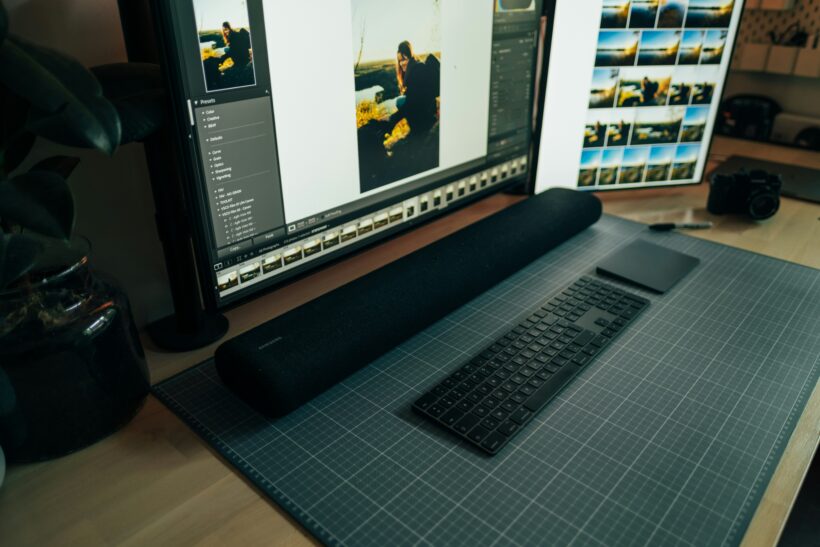
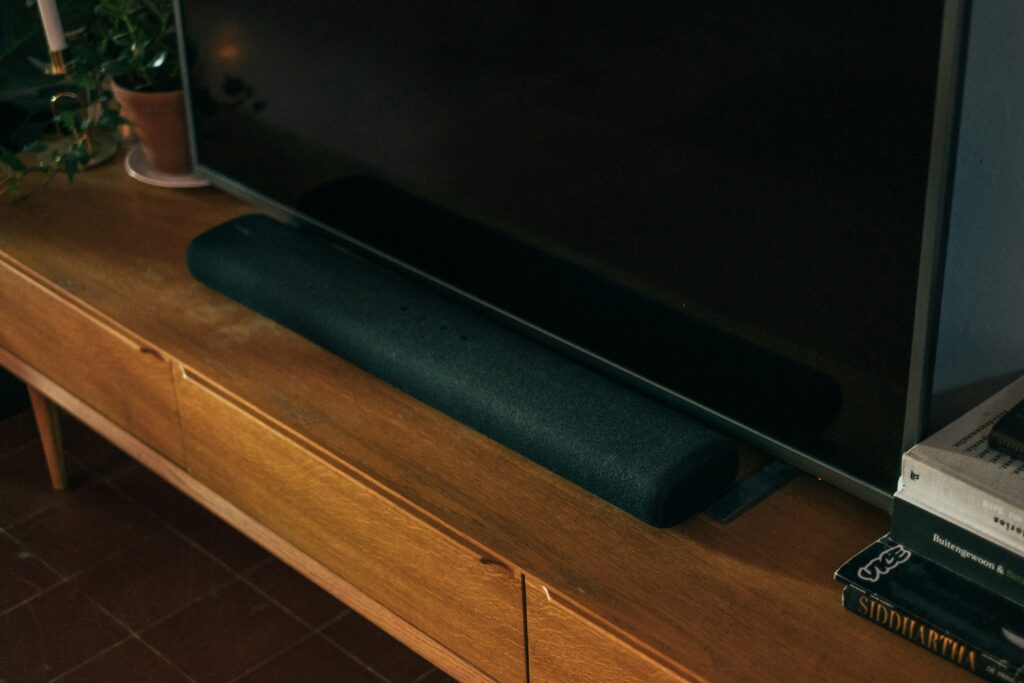
A soundbar is a long, horizontal speaker enclosure designed to sit directly beneath a television, either on the same surface or wall-mounted below the screen. Its primary purpose is to replace the thin, downward-firing speakers that are built into most modern flat-screen televisions — speakers that are, by necessity, small and underpowered due to the slim bezels of contemporary TV design.
The improvement a soundbar brings is substantial. Dialogue becomes clearer and more intelligible. Music in films and series has more texture. Action sequences gain weight and presence. This is achieved through multiple speaker drivers arranged along the length of the bar — tweeters for high frequencies, mid-range drivers for voices, and woofers or passive radiators for low-end impact. Higher-end soundbars add a separate subwoofer unit, which handles bass frequencies independently and allows the main bar to focus on clarity.
Many soundbars also simulate surround sound, using psychoacoustic techniques to create the impression that audio is coming from the sides or behind you, even though all the speakers are in a single unit in front. The most advanced models support Dolby Atmos, a three-dimensional audio format that places individual sounds at specific points in space, including above you, when paired with a compatible television and source material.
Connectivity is generally through HDMI ARC (Audio Return Channel) or eARC for the highest-quality signal from a television, with optical digital and analogue inputs as fallback options. Most soundbars also include Bluetooth for wireless audio streaming from phones and tablets.
What a Party Speaker Is Built For
A party speaker — sometimes called a portable PA speaker or a Bluetooth party box — is built around a completely different set of priorities. Where a soundbar is designed to sit fixed in one place and serve one specific purpose (TV audio), a party speaker is designed to be loud, portable, and capable of filling a space of any shape or size with music.
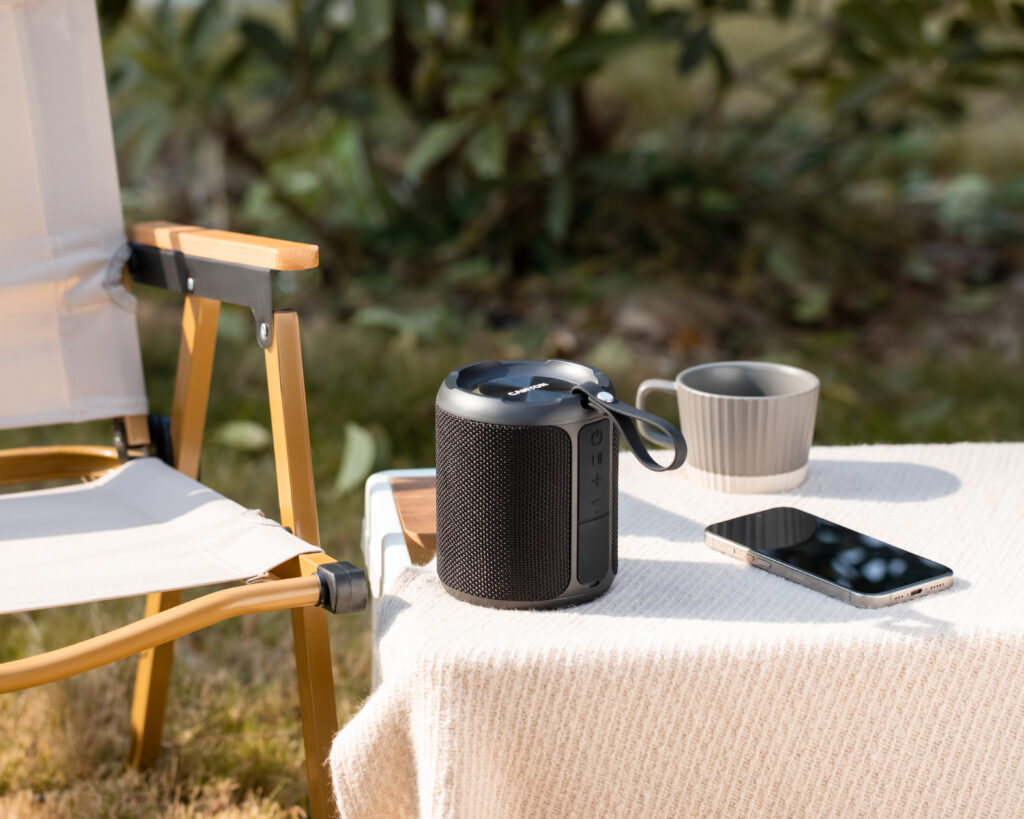
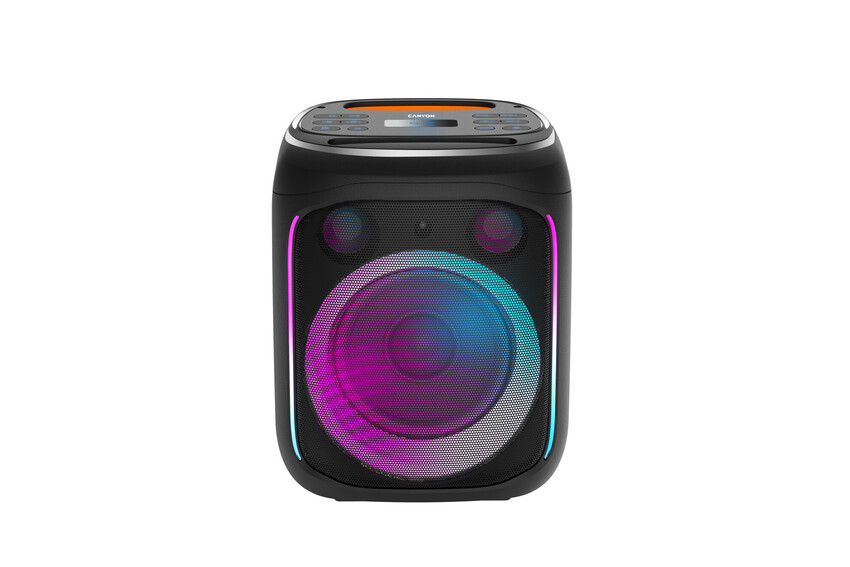
The typical party speaker is a freestanding unit with a carrying handle, a rechargeable battery, and drivers oriented to project sound outward into a room rather than forward toward a specific listening position. Power output is measured in watts — often ranging from 30W on compact models to 100W, 200W, or more on large units intended for outdoor events or large indoor spaces.
The defining characteristic is that the sound travels. A soundbar is optimised for a room where everyone is sitting in roughly the same direction, facing the television. A party speaker is optimised for a room — or an outdoor space — where people are standing, moving, and positioned in all directions. The speaker fills the space rather than projecting toward a fixed point.
Beyond raw volume, party speakers typically include Bluetooth connectivity for easy pairing from a phone, RGB lighting effects that respond to the music, microphone inputs for singing or announcements, and USB ports for charging other devices. Some include TWS (True Wireless Stereo) pairing, which lets two identical speakers link together for a stereo effect across a wider area.
Where the Two Overlap — and Where They Diverge
The soundbar vs party speaker question is sometimes posed as if the two are competing options for the same use case. In reality, they overlap only partially. Here is where the distinction becomes clearest.
For watching television and films at home, a soundbar is the right choice. It is optimised for dialogue clarity and cinematic audio, it connects directly to your TV, and it is designed to be left in place and forgotten about. The experience it creates is a meaningful upgrade over built-in TV audio, and it requires no ongoing management.
For playing music at a gathering — whether indoors or outside — a party speaker is unambiguously better suited. It is louder, fills more space, and is not tethered to a fixed position. You can carry it outside, bring it to a different room, put it in the boot of a car, or take it to a park. A soundbar cannot do any of these things.
The difference between soundbar and speakers becomes interesting in the middle cases. If you want background music while watching TV, either can work. If you want music in one room and TV audio in another, a soundbar cannot help you — but a portable speaker can. If you want to take your audio setup on a trip, only the party speaker is an option.
The partybox vs soundbar question ultimately comes down to: where do you primarily want the audio, and do you need it to move?
The Case for a Portable Speaker Over a Fixed System
The party speaker benefits most clearly in situations the soundbar was never designed to handle. Consider the following scenarios — each of which is common and each of which a party speaker handles well and a soundbar cannot address at all.
A summer evening in the garden: a portable speaker on the outdoor table, connected by Bluetooth to a phone playlist, delivers music to guests who are spread across the space. A soundbar, connected to a television inside, cannot project meaningfully through walls or into outdoor spaces.
A gathering in a living room where people are standing and moving: the party speaker sits in the corner and fills the room evenly. The soundbar, positioned in front of the sofa and optimised for a fixed listening position, loses effectiveness for people standing behind it or to its sides.
A road trip or camping weekend: the party speaker goes in the bag. The soundbar does not exist outside its mounting position under the television.
A flat or house where the living room doubles as the gathering space: a single party speaker can serve as background music for daily life and scale up to fill the space when there are guests. It does not require any installation, no HDMI cables, and no fixed position.
This versatility is what makes the portable speaker a genuinely strong alternatives to soundbar argument — not because it is better at what the soundbar does, but because it does additional things the soundbar simply cannot.

The Canyon Party Speaker: A Practical Example
If you are considering a portable speaker as your primary music solution, the Canyon PBSP5 is worth a close look. Designed as a full-featured party speaker with serious output, it combines high-wattage drivers with Bluetooth 5.0 connectivity, a long-lasting built-in battery, and RGB lighting effects that make it as much a visual feature as an audio one.
The PBSP5 handles both indoor and outdoor use without compromise. Its bass-forward sound signature is well suited to the kind of music that gets played at social gatherings — the kind where you want to feel the low end as well as hear the rest. The carry handle makes transport straightforward, and the battery life is long enough to handle an extended outdoor session without needing a power outlet.
You can find the full specifications and pricing at canyon.eu/product/cne-pbsp5/. For anyone weighing up whether to invest in a fixed soundbar or a portable speaker that can follow them from room to room and outside, the PBSP5 demonstrates how capable the portable category has become.
How to Choose the Right Soundbar
If your primary need is better TV audio in a fixed home cinema setup, here is how to approach choosing a soundbar.
Room size matters first. A compact 2.0 soundbar (two channels, no subwoofer) is sufficient for a bedroom or small living room with a television up to about 50 inches. A 2.1 system (with a dedicated subwoofer) adds low-end impact that makes a significant difference for action films and music. A 3.1 or 5.1 system adds a centre channel and additional drivers for a fuller, more enveloping sound in larger rooms.
Check the connection options. HDMI ARC is the simplest and highest-quality connection for most modern televisions. If your TV does not have ARC, optical digital is the standard fallback. Some older televisions only offer analogue output, so check before purchasing.

Consider whether you want Dolby Atmos support. This requires both a compatible soundbar and a television or streaming service that outputs Atmos content — but if you watch a lot of films and series on platforms like Netflix or Apple TV, the immersive audio difference is noticeable.
Budget allocation is worth thinking through too. A soundbar in the €100–€200 range delivers a strong improvement over built-in TV speakers for everyday use. Moving into €300–€500 adds a subwoofer, better spatial simulation, and higher-quality drivers. Above €500, you are paying for Atmos certification, high-end codec support, and premium materials.
How to Choose the Right Party Speaker
If your primary need is portable, room-filling music — for gatherings, outdoor use, or as a versatile music system at home — here is how to approach choosing a party speaker.
Output power and perceived volume are the most important starting point. For a small indoor room or a balcony, 30–60 watts is adequate. For a large living room, a garden, or a terrace with guests, 80–150 watts gets you to the volume levels where music feels present rather than just audible. Above 150 watts, you are in territory suitable for outdoor events or large indoor spaces.
Battery life varies widely across the category. For home use where a power outlet is accessible, this matters less. For outdoor events, look for at least 8–10 hours of battery at moderate volume — some models offer 12 or more hours, which covers a full day of use.
Check whether the speaker offers TWS pairing if you think you might want two units eventually. This doubles the coverage area and creates a genuine stereo effect, which is noticeably better for music when you have the space.
Portability versus output is the main trade-off. Larger, heavier speakers generally produce more volume and more bass, but are harder to carry and less suited to frequent transport. Compact models are easier to move but cap out at lower volumes. Think about where you will most often use it and weight the choice accordingly.
Making the Decision
For most people, the choice is not actually all that difficult once the use cases are clear.
If you spend most evenings watching films and series on a television and want significantly better audio without any complexity, buy a soundbar. Set it up once, connect it to your TV, and forget about it.
If you regularly host gatherings, spend time outdoors, want music in different rooms, or travel and want your audio setup to come with you, buy a portable party speaker. It does more, goes more places, and adapts to more situations.
If you have the budget for both and the use cases for both — a fixed home cinema setup in one room and a portable option for everything else — that is also a perfectly reasonable conclusion. The two categories do not compete; they complement.
The most common mistake is buying a soundbar expecting it to serve both purposes, then being frustrated that it cannot move and does not fill the space well at a gathering. Understanding what each type of speaker is designed for — and being honest about which situation describes you — leads to a straightforward decision and an audio setup you will actually enjoy.

 Tatyana Ryzhova
 Angelina