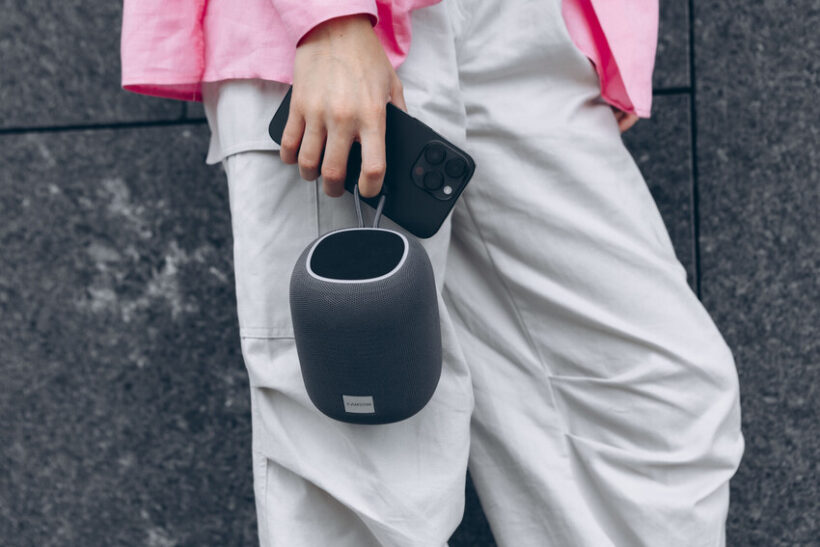
Curious how far mid-range sound has actually come? Browse Canyon’s Bluetooth speakers here.
A $30 speaker and a $150 speaker can share more internal parts than either brand wants to admit. Is it worth overpaying for a brand, or just for the logo stitched onto the fabric? The honest answer sits somewhere in between, and it depends entirely on what you actually do with the speaker.
Every basic budget Bluetooth speaker on the market today shares a surprising amount of DNA with its pricier siblings, right down to the chipset vendor. The real differences show up in three specific places, and once you know where to look, the $150 price tag stops feeling mysterious.
The Price Anatomy: What Really Makes Up the Cost of a $150 Speaker?
Three things make up that $150 price tag, and only one of them is really about sound.
The first is materials. Aluminum unibody shells, eco-leather straps, and anodized grilles cost real money to source and machine, and they do make a speaker feel sturdier in your hand. That part of the markup is tangible.
Component teardowns of typical Bluetooth speakers put the raw driver, amplifier board, and battery at somewhere between $10 and $20 per unit, even for mid-tier models. A premium aluminum enclosure alone can add several dollars per unit over injection-molded plastic, before labor, tooling, and finishing are even counted.
The second is ecosystem. Premium brands build and maintain dedicated apps for multi-speaker linking, custom EQ profiles, and firmware updates. Building and supporting that software costs the brand money every year, whether or not you ever open the app.
The third is what buyers half-jokingly call the “logo tax.” Marketing budgets for flagship audio brands run into the tens of millions of dollars annually, covering ads, sponsorships, and retail placement. That spend gets baked into every unit sold, regardless of what’s inside the box.
None of that is a scam. It’s simply not the same thing as sound quality, and it’s worth knowing which part of the price you’re actually paying for before you decide.
Where A-Brands Genuinely Win (An Honest Look)
This comes down to a short but real list.
Premium acoustics research is expensive, and it shows in three concrete places. Hi-res codec support, like Sony’s LDAC, squeezes more detail out of a Bluetooth stream than the basic SBC codec most budget and mid-range speakers rely on, though it’s worth noting that even several flagship party speakers from other major brands skip hi-res codecs entirely and stick with standard SBC or AAC.
Custom DSP tuning is the second real advantage. Brands with decades of acoustic R&D use digital signal processing to predict driver movement in real time, which lets a speaker play louder with less distortion before its components physically strain. That’s genuine engineering, even when marketing dresses it up in flashier language than “a fixed DSP profile.”
Premium design is the third, and it’s the most visible one. CNC-machined housings, tighter manufacturing tolerances, and app-based multi-speaker ecosystems, like JBL’s PartyBoost and Auracast linking, are real conveniences that took real engineering time to build.
None of these three advantages are fake, and buyers who genuinely use hi-res streaming, multi-speaker parties, or premium materials get real value for the extra money. The honest caveat is that plenty of flagship-priced speakers skip hi-res codecs entirely and still charge a premium purely for design and ecosystem, so it pays to check the actual spec sheet rather than assume the price implies every advantage at once.
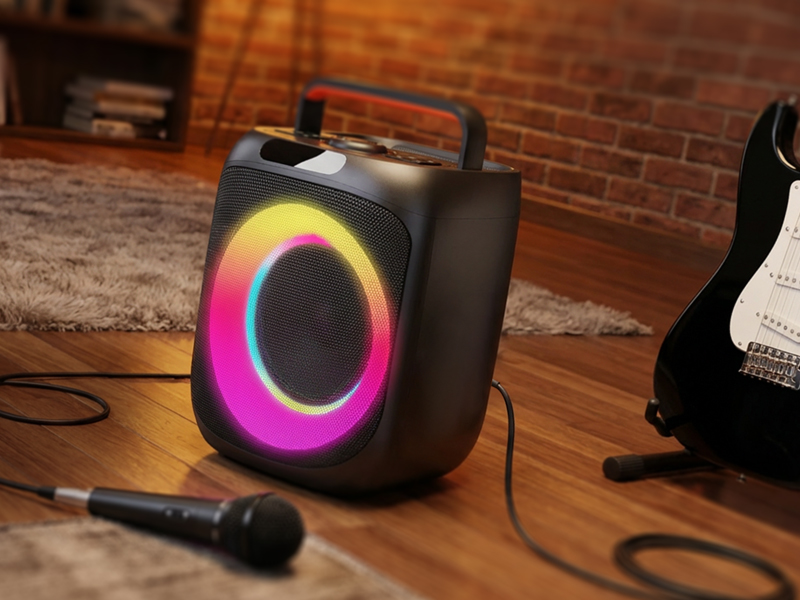
Why Is the Mid-Range Segment, Using Canyon as an Example, the New Smart Choice?
Three reasons stand out.
The Same Technology Inside
Bluetooth 5.3 chips and basic audio amplifier boards are manufactured at a small number of the same factories, regardless of which logo ends up on the box. A mid-range speaker and a premium one are frequently drawing from the same component supply chain.
This is the same commoditization that reshaped the smartphone and laptop markets a decade earlier. Once a core technology becomes cheap and reliable enough to mass-produce, the gap between “budget” and “flagship” narrows to whatever sits on top of that shared foundation, design, software, and brand, rather than the foundation itself.
Honest Water Protection and Battery Life
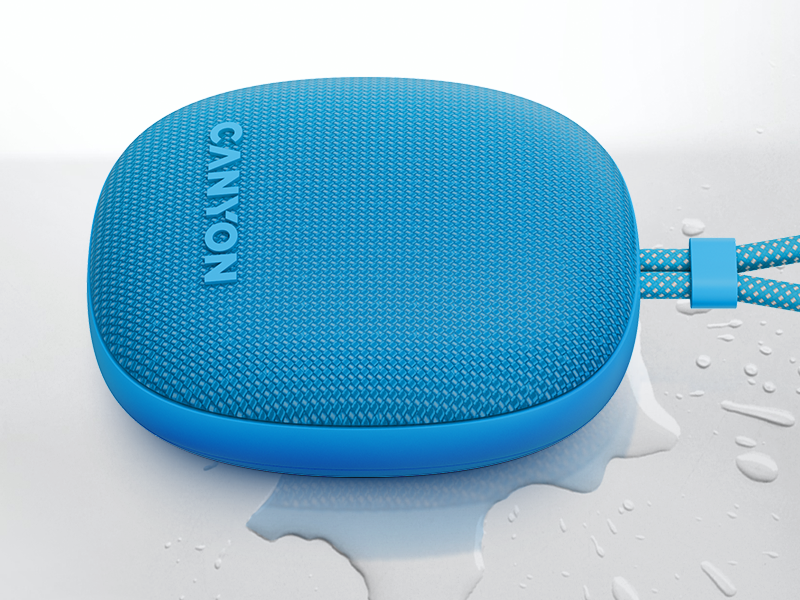
Canyon’s Hexagon 10 TWS, for example, runs up to 12 hours on a charge with an IPX5 splash rating, and models like the OnMove 12 step up to full IPX7 submersion protection, figures that sit comfortably alongside plenty of flagship-priced competitors.
TWS: Two Speakers for the Price of Half of One Premium Model
For the price of one premium speaker, you can buy two mid-range units, like Canyon’s OnMove line, link them in True Wireless Stereo, and get genuine left-right separation that a single expensive driver physically cannot produce alone.
Do the math on a real example: two Canyon OnMove speakers at roughly $35-$45 each land close to $80-$90 combined, comfortably under a single $150 premium unit, while adding true stereo separation that one speaker alone can’t deliver regardless of price.
Finding an inexpensive speaker with good sound used to mean real compromise: tinny highs, muddy bass, a battery that died halfway through an afternoon. Component commoditization closed most of that gap over the past few years.
Search for JBL alternatives today and mid-range brands like Canyon show up for a straightforward reason: comparable Bluetooth hardware, comparable water resistance, at a noticeably lower price point.
Spec Showdown: Comparing the Numbers
Here’s a side-by-side spec comparison across the three tiers, using typical, publicly listed specs rather than any one specific model.
| Tier | Typical Price | Bluetooth | Water Rating | TWS Pairing | Hi-Res Codec |
| Budget | $20-$40 | 5.0-5.3 | IPX4-IPX5 | Rare | No |
| Mid-range (Canyon) | $40-$90 | 5.3 | IPX5-IPX7 | Yes | Usually no |
| Premium A-brand | $130-$250+ | 5.3 | IP67 or higher | Yes | Sometimes |
The gap that actually costs money sits at the very top: hi-res codec licensing and flagship-level DSP tuning. Everything else, connectivity, water resistance, basic stereo pairing, has mostly caught up across price tiers.
Battery life tells a similar story once you look past the marketing copy. Manufacturers across every tier measure playtime at a fixed, moderate volume with lights off, so the real-world gap between a budget speaker and a premium one usually comes down to battery capacity in mAh, not some proprietary efficiency advantage locked behind a brand name.
Conclusion: Who Should Pay More, and Who Should Save?
Audiophiles who can hear the difference LDAC makes, and design fans who care about aluminum versus plastic in their hand, get real value from paying the premium.
Frequent travelers who rely on one speaker’s ecosystem, app-based multi-speaker parties with a large existing collection, or a specific flagship’s exact sound signature also have a legitimate reason to stay in the premium tier.
Everyone else, bike commutes, backyard picnics, background music while cooking, gets the same core listening experience from a well-specced mid-range speaker, at roughly half the price or less. That’s not a compromise. It’s just where the actual value sits in 2026, and understanding the three real cost drivers behind any speaker’s price tag is what turns a guess into an informed decision.

 Herzberg