Shopping for a speaker that can actually handle water? Browse Canyon’s Bluetooth speakers here.
IPX4 and IP67 look similar on a spec sheet. They are not close in real protection. One survives rain. The other survives a swim. Mixing them up ruins speakers at pool parties every summer.
What Is the IP (Ingress Protection) Rating?
The IP code comes from IEC 60529, an international standard, not a marketing term any brand can define on its own. Two digits follow the letters “IP.” The first covers solid objects, like dust. The second covers liquids, like rain or full immersion.
A letter “X” in place of a digit means that axis wasn’t tested at all, not that it failed. IPX4 uses that X: no official dust rating, water rating of 4. IP67 tests both axes: dust rating of 6, water rating of 7.
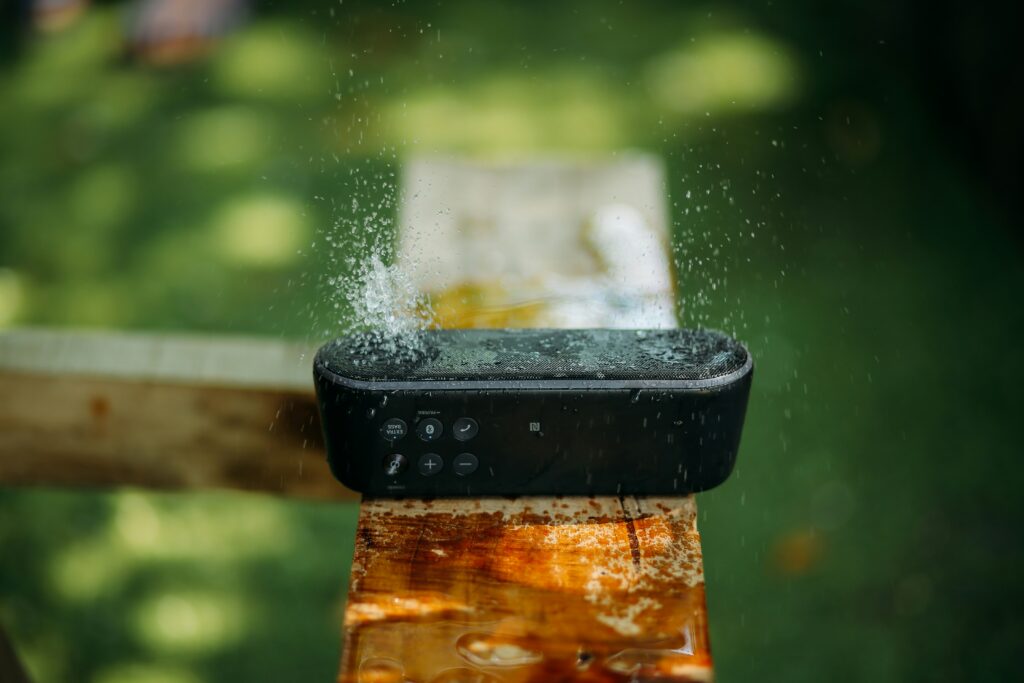
Understanding IPX4 different from IP67 comes down to exactly that gap. IPX4 only proves splash resistance from any direction, the kind of protection that survives rain, sweat, or a knocked-over drink. IP67 proves something far stronger: a fully sealed, dust-tight enclosure that survives being dunked in up to a meter of water for 30 minutes.
Manufacturers pick IPX4 in Bluetooth speaker models aimed at kitchens, showers, and casual outdoor listening, where speed and cost matter more than deep-water survival. IP67 in Bluetooth speaker terms signals something built for the beach, the boat deck, or a genuine accidental drop into a puddle.
Canyon’s own speaker lineup shows the gap clearly. The OnMove 11 carries an IPX6 rating, built to shrug off heavy rain and splashes but not a swim. The OnMove 12 steps up to IPX7, rated for full submersion, which is why it’s marketed for beach days and poolside lounging rather than just rainy commutes. Neither one is labeled dust-tight, since both focus their testing on the water side of the code.
IPX4 vs IP67 at a Glance
Here’s the full breakdown of the ratings you’ll actually see on speaker boxes.
| Rating | Tests For | What It Actually Means |
| IPX0 | Nothing | No water protection of any kind |
| IPX3 | Spraying water | Handles an angled spray, like light rain |
| IPX4 | Splashing water | Splashes from any direction; rain, sweat, spills |
| IPX5 | Water jets | Low-pressure jets, roughly a garden hose |
| IPX6 | Powerful jets | Strong jets; boat decks, rough weather |
| IPX7 | Immersion | Up to 1m depth for 30 minutes, dust untested |
| IP67 | Dust + Immersion | Fully dust-tight, plus the same 1m/30-min immersion |
| IP68 | Dust + Deeper immersion | Dust-tight; depth/time set by the manufacturer, beyond 1m |
That single missing digit in IPX4 matters more than it looks. A speaker with no dust rating can still let in fine sand or dirt over time, even while shrugging off rain perfectly well.
Will an IP67 Speaker Survive at the Bottom of a Pool? (Key Limitations)
Not necessarily, and this is where most buyers get burned. The IP67 test happens in a controlled lab, in still, clean, fresh water, at a maximum depth of exactly 1 meter.
Most home pools run deeper than 1 meter at the center, especially anything built for diving. A speaker that sinks past that depth, even briefly, has left the conditions it was actually tested under.
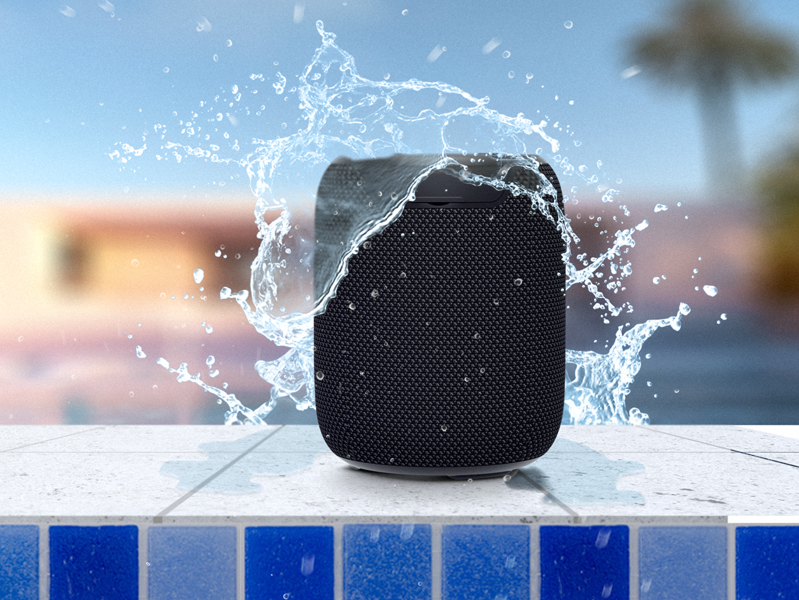
Pool water adds another problem the lab never tested for: chlorine. Chlorine and other pool chemicals degrade rubber seals and gaskets faster than plain fresh water does, which shortens a speaker’s real waterproof lifespan even if it survives the first few dips.
Time adds a third gap. The official IPX7 test runs for 30 minutes. Leaving a speaker sitting on the pool floor for an afternoon, or through repeated swims across a weekend, pushes well past what any manufacturer actually verified.
None of this means IP67 speakers are bad by the pool. It means “IP67” describes a lab test, not a lifetime guarantee for every pool scenario a buyer might imagine.
Temperature swings add a final wrinkle most buyers never consider. The official test happens at room temperature, between roughly 15°C and 25°C. A speaker left in direct summer sun before a swim, or dropped straight from a hot poolside deck into cooler water, experiences thermal stress the lab test never simulated, which can strain seals over repeated cycles.
How to Choose a Protected Speaker for Your Needs
This really depends on where the sound will actually go, not on chasing the highest number on the box.
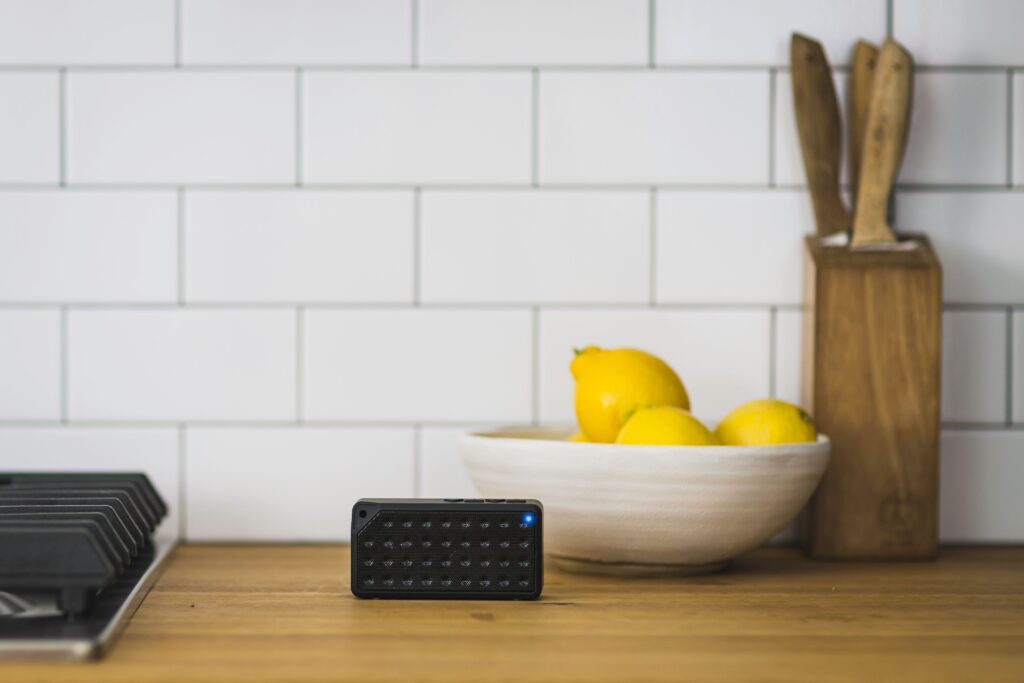
For a kitchen counter or bathroom shelf, an IPX4 rating covers splashes and steam without paying extra for submersion protection nobody will use there.
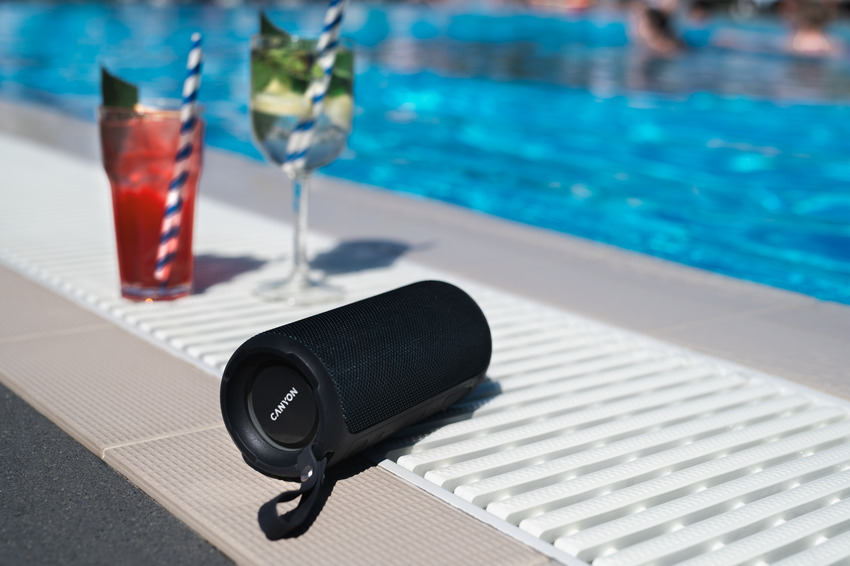
For poolside lounging or beach trips, IP67 or higher earns its price. Look specifically for a dust-tight first digit, not just a strong water number, since sand at the beach is every bit as much a threat as the water itself.
For boating, kayaking, or anything where a full drop overboard is realistic, treat 1-meter, 30-minute immersion as a worst-case buffer, not a swimming feature. A speaker rated IP68 gives a genuine, deeper, manufacturer-specified margin over a basic IP67 unit.
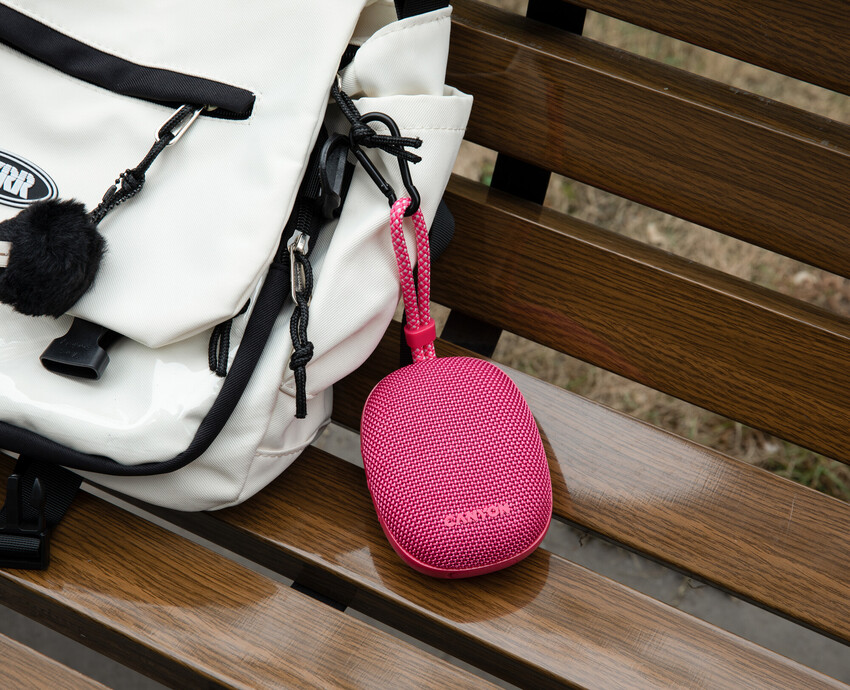
For everyday commuting or gym use, IPX5 or IPX6 usually strikes the right balance: enough protection for sweat and sudden rain, without paying for immersion resistance that a gym bag will never test.
Rules for Caring for a Waterproof Speaker
A few habits keep a waterproof speaker waterproof for years, not just for its warranty period.
Rinse it under fresh, running tap water after any exposure to salt water, chlorine, or sand, since dried residue works into seams over time and quietly wears down the seals.
Let it dry fully in open air before charging. Charging ports are rarely rated to the same level as the speaker’s main housing, and moisture trapped inside a port during charging is a common, avoidable failure point.
Check the port covers and seams for cracks or gaps every few months, especially after drops. A rating only holds as long as the physical seal that earned it stays intact.
Store it somewhere dry between uses rather than in a damp beach bag. Prolonged humidity, even without direct water exposure, shortens the working life of the internal seals that any IP rating depends on.
Reading the two digits after “IP” takes seconds once you know what each one tests. That single habit is the difference between a speaker that survives years of splashes and one that quietly fails the first time it meets real water.
 Tatyana Ryzhova
 Herzberg