
Want to see the technology in action? Check out Canyon’s OnCharge 140 GaN charger here.
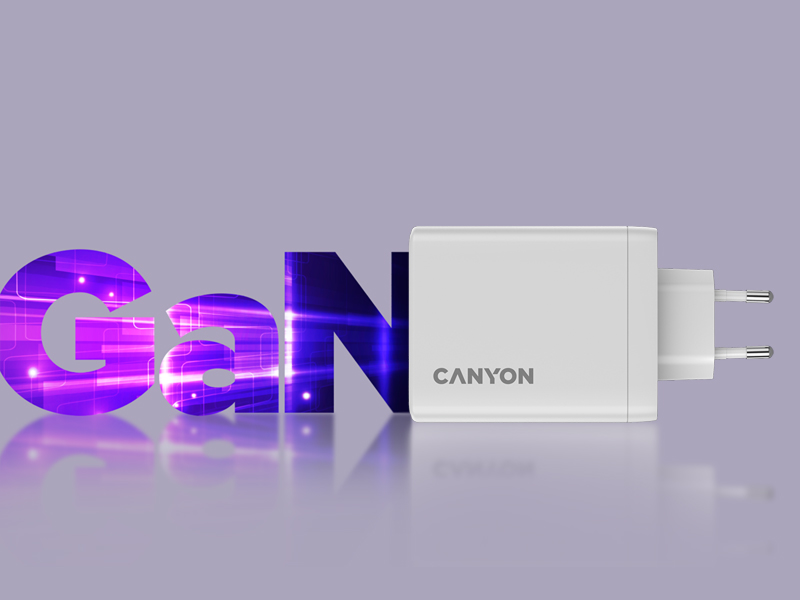
GaN chargers pack more power into less space. That’s not marketing. It’s materials science. Swap silicon for gallium nitride, and switching losses drop. Less wasted energy means less heat. Less heat means a smaller heatsink. A smaller heatsink means a smaller charger.
What Is GaN in Power Banks and Chargers, and Why Is This Technology the Future?
Standard silicon transistors have run charger circuits for decades. They work, but they waste a chunk of every watt as heat, which forces manufacturers to add bulky metal heatsinks and plastic housing just to keep temperatures safe.
Gallium nitride (GaN) is a different semiconductor material entirely. It switches electrical current on and off far faster than silicon, and it does so while losing far less energy along the way. That single property changes what a charger can look like.
So, what is a GaN charger in practice? It’s a power adapter or power bank that uses GaN transistors in its internal circuitry instead of, or alongside, traditional silicon ones. The plug in your hand hasn’t changed. What sits behind the plastic case has.
The physics behind that comes down to one property: band gap. Gallium nitride has a wider electronic band gap than silicon, which lets it handle higher voltages and switch on and off at much higher frequencies without breaking down. A higher switching frequency means smaller internal transformers and capacitors, which is the actual reason a gallium nitride charger can shrink so much compared to an old-style silicon brick.
Gallium nitride charging isn’t brand new science. GaN has powered LEDs and radar systems since the 1990s. Consumer GaN charging only became affordable around 2018, once manufacturing costs dropped enough for phone and laptop chargers to use it.
You might come across the term “gallium nitride battery” in casual conversation online. That’s a mix-up worth clearing up: GaN sits in the charging circuit, not inside the battery cells. The battery chemistry stays the same lithium-ion setup either way; GaN simply controls how efficiently power reaches it.
GaN chargers and GaN power banks matter most to two kinds of buyers: people who travel with a laptop, and people who hate carrying three separate chargers for a phone, tablet, and laptop. Both groups get the same core benefit, less bulk for the same watts, or more watts for the same bulk.
4 Key Benefits of GaN Chargers and Power Banks
Four advantages explain why GaN has taken over premium chargers so quickly.
1. Incredible Compactness — More Power in a Smaller Case
The first is size. A traditional 65W silicon charger needs real estate for its heatsink. A GaN adapter at the same wattage, like Canyon’s own GaN charger lineup, fits into a shape barely bigger than the average phone charger from a decade ago. Less wasted heat simply means less metal is needed to dissipate it.
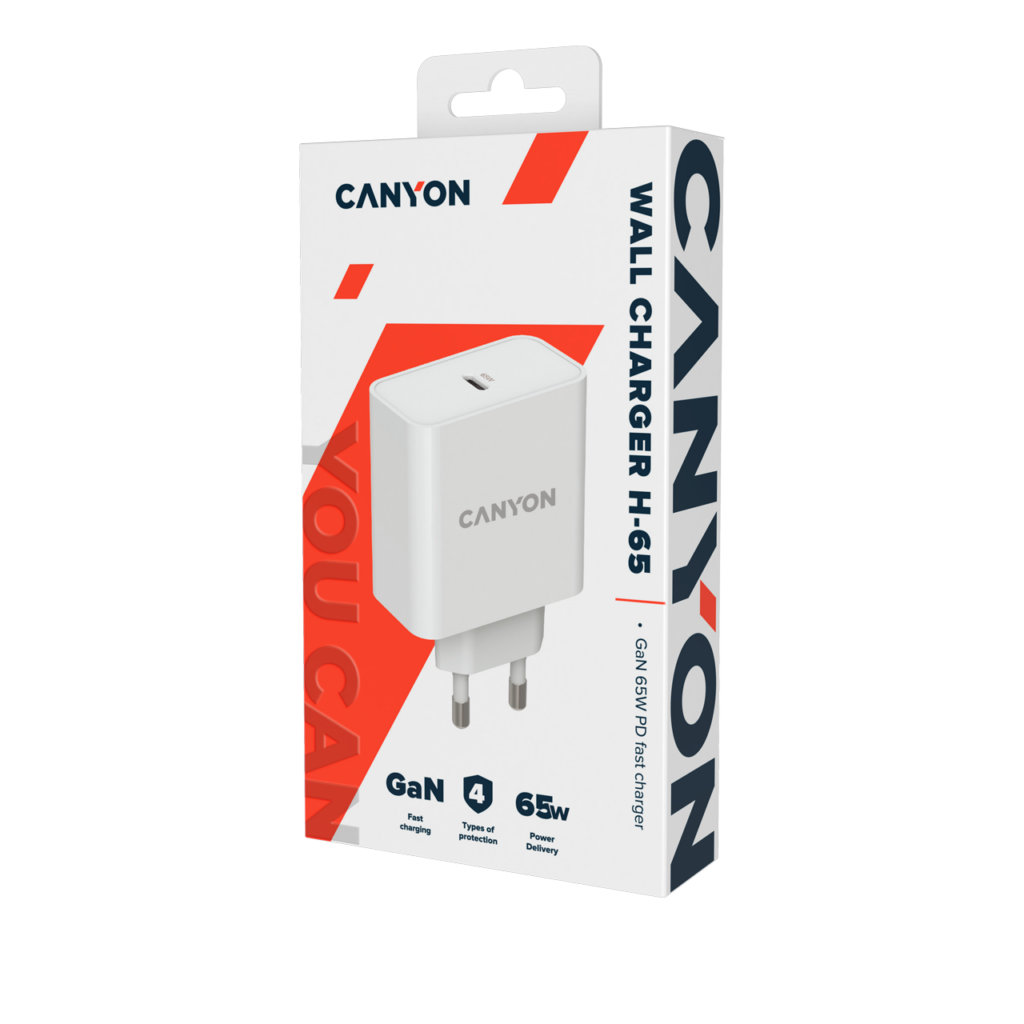
Canyon’s H-65 wall charger is a working example. It delivers 65W through Power Delivery, in a housing that fits an average jacket pocket, entirely because GaN circuitry doesn’t need the bulk that silicon does at that wattage.
2. High Power Output — Charging Laptops From 65W to 140W+
The second advantage is raw output. Because GaN transistors run cooler at high power, manufacturers can push wattage further without the charger overheating. Canyon’s H-100 and H-140-01 chargers reach 100W and 140W respectively from housings not much larger than a deck of cards, enough to fast-charge a MacBook Pro or a gaming ultrabook from empty in well under two hours.
That kind of output used to require a laptop’s original power brick, the heavy kind with a built-in fan-cooled transformer. A single GaN charger, like Canyon’s OnCharge 140, now covers a laptop, a phone, and a tablet from one wall socket.
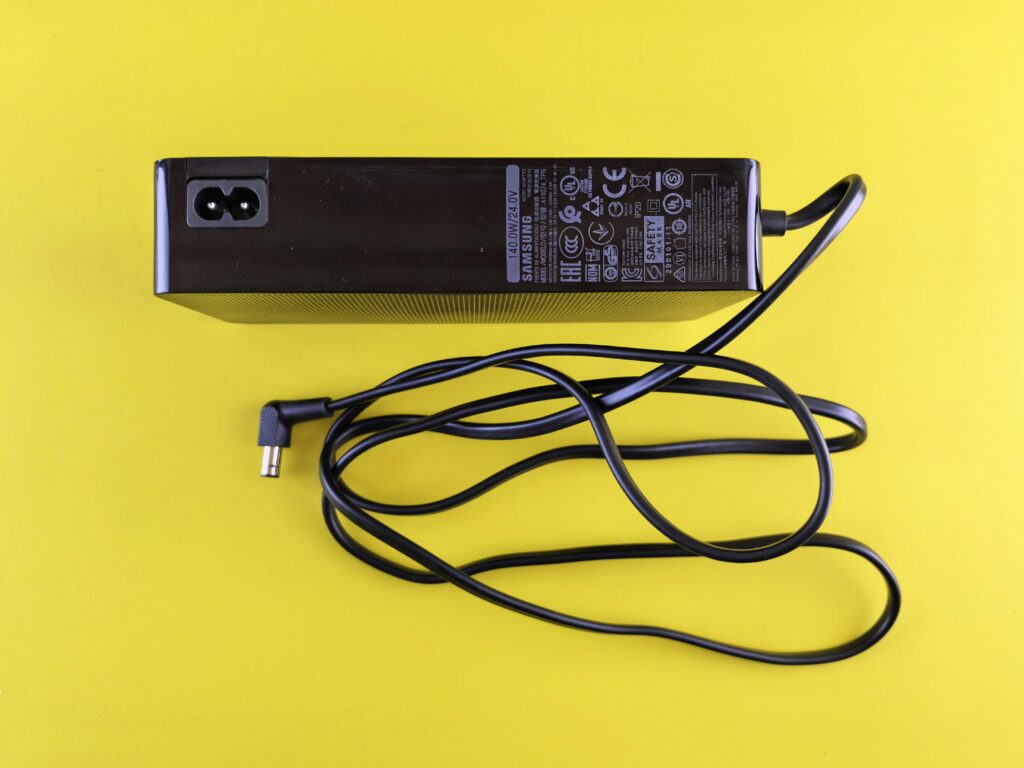
Real charging numbers make the difference concrete. A 65W silicon laptop charger from five years ago weighs roughly 300 grams and takes up the space of a small paperback. Canyon’s H-65, delivering the same 65W through GaN circuitry, weighs closer to 130 grams and fits in a closed fist. Neither charger charges the laptop faster than the other at the same wattage; the difference sits entirely in size, weight, and heat, not raw speed.
3. Minimal Heat and Better Safety
The third advantage is heat management, and it’s the one that protects your devices, not just your bag space. Silicon transistors waste more energy as heat with every watt pushed through them. GaN transistors waste far less, so the whole charger, and the phone or laptop plugged into it, runs measurably cooler under sustained load.
Cooler operation isn’t only about comfort. Lithium-ion batteries age faster when charged while hot, so a charger that runs cooler under identical wattage helps protect long-term battery health, especially on laptops that get charged daily for years.
4. Energy Efficiency — Less Power Lost as Heat
The fourth advantage is efficiency, and it shows up on your electricity bill more than in daily use. GaN converts a higher share of the wall’s AC power into usable DC power for your device, and wastes less as ambient heat. Multiply that saving across millions of chargers running worldwide, and the efficiency gap becomes an environmental argument, not just a technical one.
Spotting a genuine GaN charger while shopping is straightforward once you know where to look. The packaging or product page will name the material outright, usually as “GaN” or “Gallium Nitride Technology” printed near the wattage figure. Weight is a second clue: a 65W charger under 100 grams is almost certainly GaN, since a silicon design at that output would need extra mass just for heat dissipation. When a listing stays silent on the internal components, it’s safe to assume the charger uses ordinary silicon.
Are There Any Downsides to GaN Technology?
A few, though none of them outweigh the benefits for most buyers.
Cost is the most obvious one. A GaN adapter typically costs more than a silicon charger at the same wattage, since GaN wafers remain pricier to manufacture than silicon ones, even years after the technology went mainstream.
GaN also brings no benefit at low wattages. A basic 5-watt phone charger gains nothing from GaN, since there’s barely any heat to save in the first place; the technology earns its keep starting around 30W and above, where silicon’s losses start adding up.
Extreme heat is still possible at extreme wattage. A 140W GaN charger under full sustained load still gets warm, just noticeably less warm than a silicon charger would at the same output. GaN reduces the heat problem; it doesn’t erase it entirely.
Who Should Definitely Switch to a GaN Charger?
Travelers packing one bag for a laptop, phone, and tablet get the clearest win, since a single 100W-or-higher GaN adapter, like Canyon’s OnCharge 100ACC, can genuinely replace three separate chargers.
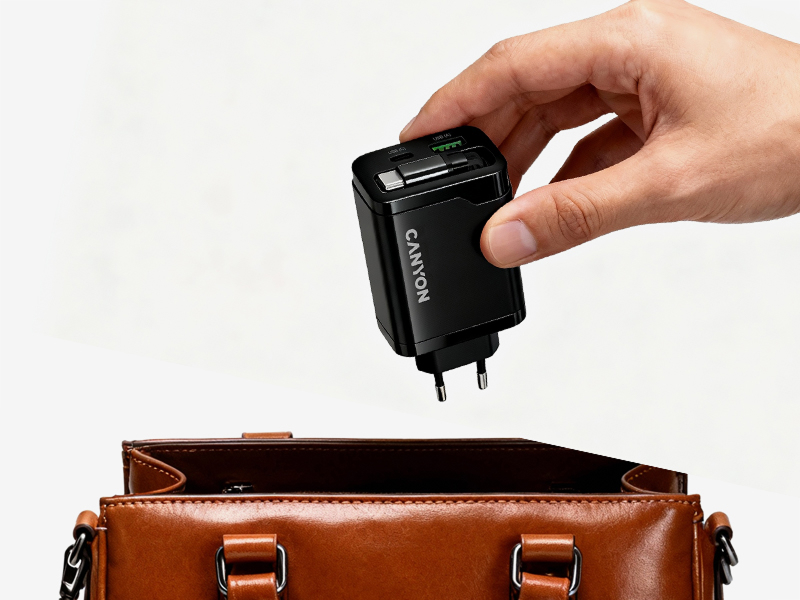
Remote workers who move between a home office, a co-working space, and client meetings benefit just as directly. Carrying one compact charger instead of a laptop brick and a phone charger adds up over a working month.
Anyone charging a modern high-wattage laptop should also make the switch. If your laptop’s original charger tops 65W, a GaN-based replacement at the same wattage will run noticeably cooler and take up far less space in a bag.
Casual users charging only a basic smartphone overnight can safely skip the upgrade. A standard 20W charger already does the job, and the GaN price premium buys speed and compactness that low-power charging simply doesn’t need.
A few questions come up often enough to answer directly.
Does GaN charge a phone faster than silicon at the same wattage? No. Wattage, not the transistor material, sets charging speed. A 20W GaN charger and a 20W silicon charger deliver the same power; the GaN version just does it in a smaller, cooler package.
Is a GaN charger safe to leave plugged in overnight? Yes, under normal use. GaN chargers include the same overvoltage, overcurrent, and overheating protections as quality silicon chargers, and their lower operating temperature is, if anything, a safety advantage over older designs.
Can a GaN charger damage a device that doesn’t need that much power? No. Every modern charger, GaN or silicon, negotiates power with the connected device and only sends what that device requests, whether it’s a Power Delivery or Quick Charge negotiation.
Conclusion
GaN shows up in power banks the same way it shows up in wall chargers, through the circuitry that manages input and output, not through the battery cells themselves. A high-capacity power bank rated for 100W-plus laptop charging benefits from GaN exactly like a wall adapter does: less heat inside a sealed case, which matters even more in a power bank, since that battery pack can’t rely on open airflow the way a wall charger can.
Weight matters twice as much in a power bank. Every gram saved on the internal circuitry is a gram that manufacturers can redirect toward battery capacity instead, which is why higher-wattage GaN power banks increasingly pack more mAh into roughly the same size as older, lower-power models.
GaN charging is not a passing trend. It’s the direction the entire charger and power bank industry has already committed to, from budget adapters to flagship laptop bricks. The technology shrinks the charger in your bag while keeping your devices running cooler, and that combination is exactly why brands like Canyon have moved their higher-wattage lineup to GaN by default. If your next charger purchase involves anything above 45W, GaN is worth the small price difference over silicon.

 Angelina
 Herzberg